There is far too much land clearing going on in Cameron Highlands. Ever so often it would come out in the newspaper. And what has the authorities done about them? Almost nothing. Just lip service.
No doubt land is scarce in the highlands for growing vegetables. There should be a systematic way of doing agriculture without jeopardizing the environment.
Stern action to be taken against the culprits
Monday May 20, 2013
CAMERON HIGHLANDS: Those caught carrying out illegal land clearing will be arrested immediately, said Cameron Highlands Land and District Officer Datuk Ahmad Daud.
He said he had directed his enforcement officers to conduct a raid in the wake of The Star's report yesterday over the extensive clearing of slopes in Pos Terisu.
Over 40ha of land spread over four valleys and hills were found stripped of forests in less than a month, with the areas leveled for vegetable farming.
Monday, May 20, 2013


Sunday, May 19, 2013
About various Highlands in Malaysia
Here's an interesting article about the various cool highlands in Malaysia. It has some interesting bits of history too about each of the highlands mentioned here starting with Bukit Fraser, Cameron Highlands, Penang Hill and Maxwell Hill (Bukit Larut).
Cool, cool hills
By Anwardi Jamil
19 May 2013
More than just a reprieve from the tropical heat, old hill stations are still charming and quaint, writes Anwardi Jamil
Fraser's Hill
Fraser's Hill holds sentimental value for me. In 1990, it was the location for a scene in the first telemovie I directed, Jelita Ku, starring Alice Woon and Connie Ahmad.
I returned to Fraser’s a few times for film shoots. The last time was for a couple of weeks in 1996 at the Gap Rest House to shoot the sitcom, Bukit Fraser, my version of Fawlty Towers.
The beautiful Tudor-designed Gap Rest House was ideal for the series which was based in the 60s and required a colonial hotel, lobby, restaurant and a beautiful English garden.
Today, Gap Rest House is in ruins. You can still view it if you stop by the Gap hanging bridge just before ascending Fraser’s Hill.
Cool, cool hills
By Anwardi Jamil
19 May 2013
More than just a reprieve from the tropical heat, old hill stations are still charming and quaint, writes Anwardi Jamil
Fraser's Hill
Fraser's Hill holds sentimental value for me. In 1990, it was the location for a scene in the first telemovie I directed, Jelita Ku, starring Alice Woon and Connie Ahmad.
I returned to Fraser’s a few times for film shoots. The last time was for a couple of weeks in 1996 at the Gap Rest House to shoot the sitcom, Bukit Fraser, my version of Fawlty Towers.
The beautiful Tudor-designed Gap Rest House was ideal for the series which was based in the 60s and required a colonial hotel, lobby, restaurant and a beautiful English garden.
Today, Gap Rest House is in ruins. You can still view it if you stop by the Gap hanging bridge just before ascending Fraser’s Hill.
Monday, February 04, 2013
Landslide in Cameron Highlands and Malaysia
Landslide are common occurrence in Cameron Highlands. Wherever there are hill-slope, high rainfall, insufficient vegetation to prevent soil erosion, landslide would occur. Although I have not faced such misfortune, I don't want to think about it whenever I go up the highlands. After all, disaster is beyond our human control and I leave it to God for our protection and safe journey.
If PWD can come up with the system to predict the probability of landslide, it could be good. Because whenever tourist going up CH, for those who worry, they called up their hotel and asked about landslide. They also email me too. Like I said, nobody knows if there was a landslide or whether a landslide would occur. So until such a predicting system was put up by PWD, just cross your fingers and pray to God that your drive up Cameron Highlands would be uneventful.
Cheers!

Predicting future landslides
By P. Aruna
Monday February 4, 2013
PETALING JAYA: Work has begun on an early warning system that can send out alerts at least two hours before a landslide occurs.
People living in landslide-prone areas will be warned via TV and radio, enabling quicker evacuation.
The Public Works Department (PWD) is in the process of creating the system, similar to the high-tech model used in landslide-prone Hong Kong.
The PWD had already conducted pilot studies at two "hot spots" Bukit Antarabangsa, Selangor and the Tapah-Cameron Highlands road.
If PWD can come up with the system to predict the probability of landslide, it could be good. Because whenever tourist going up CH, for those who worry, they called up their hotel and asked about landslide. They also email me too. Like I said, nobody knows if there was a landslide or whether a landslide would occur. So until such a predicting system was put up by PWD, just cross your fingers and pray to God that your drive up Cameron Highlands would be uneventful.
Cheers!

Predicting future landslides
By P. Aruna
Monday February 4, 2013
PETALING JAYA: Work has begun on an early warning system that can send out alerts at least two hours before a landslide occurs.
People living in landslide-prone areas will be warned via TV and radio, enabling quicker evacuation.
The Public Works Department (PWD) is in the process of creating the system, similar to the high-tech model used in landslide-prone Hong Kong.
The PWD had already conducted pilot studies at two "hot spots" Bukit Antarabangsa, Selangor and the Tapah-Cameron Highlands road.
Wednesday, December 12, 2012
Cameron Highlands Resort Murder Mystery Dinner
Fancy having a Cluedo style dinner at Cameron Highlands Resort! Instead of playing a board game, how about doing it role playing style?! So this was what the YTL Cameron Highlands Resort hotel did! Of course at the end of mystery play time the mystery would be solved and the murderer found.
But the same can't be said of the real mystery of Jim Thomson disappearance. Without sufficient evidence, all you end up with are just conspiracy theories. Another conspiracy tale to add to the world's many myriad unsolved mysteries and conspiracies.
As for this dinner mystery Cluedo stle bash, it is no mystery, just pure fun! Cheers!
Monday, March 26, 2012
45th anniversary of Jim Thompson's disappearance
Jim Thompson the Thai Silk King disappeared mysteriously 45 years ago in Cameron Highlands. Til this day nobody knows what happened to him as his body was never found. It is one of those mystery of Cameron Highlands that still intrigues today.
Re-living the day Jim Thompson went missing
By Michael Cheang
Monday March 26, 2012
On the 45th anniversary of Jim Thompson's disappearance in Cameron Highlands, Star2 takes readers back to that fateful day when the whole town was abuzz with news of a missing mat salleh.
WE were on the hunt for Jim Thompson. No, not Jim Thompson the Thai Silk King, whose disappearance 45 years ago in the Cameron Highlands jungle remains one of the most enduring mysteries in the region.
The man we were looking for was taxi driver Ng Kiew Chay, whom the locals of Cameron Highlands refer to as "Jim Thompson".

Jim Thompson, the Thai Silk King,
who disappeared in Cameron Highlands
45 years ago today.
You see, each time we mentioned we wanted to talk about the day Thompson (the actual one, not the taxi driver) disappeared, everyone kept telling us the same thing – "Look for that taxi guy Thompson!"
Re-living the day Jim Thompson went missing
By Michael Cheang
Monday March 26, 2012
On the 45th anniversary of Jim Thompson's disappearance in Cameron Highlands, Star2 takes readers back to that fateful day when the whole town was abuzz with news of a missing mat salleh.
WE were on the hunt for Jim Thompson. No, not Jim Thompson the Thai Silk King, whose disappearance 45 years ago in the Cameron Highlands jungle remains one of the most enduring mysteries in the region.
The man we were looking for was taxi driver Ng Kiew Chay, whom the locals of Cameron Highlands refer to as "Jim Thompson".

Jim Thompson, the Thai Silk King,
who disappeared in Cameron Highlands
45 years ago today.
You see, each time we mentioned we wanted to talk about the day Thompson (the actual one, not the taxi driver) disappeared, everyone kept telling us the same thing – "Look for that taxi guy Thompson!"
Tuesday, March 06, 2012
Kea Farm Green Cow Area News
Green Cow residents demand A-G drop charges against three who obstructed developer
By Joseph Sipalan
Tuesday March 6, 2012 MYT 11:50:00 AM
PUTRAJAYA: Residents of Green Cow in Cameron Highlands are demanding that the Attorney-General drop charges against three people who obstructed earth works in their hillside village.
Some 30 residents of Green Cow and PSM members claimed the earth works were illegal and endangered the lives of seven families.
They also claimed victimisation by the police in arresting the trio as there were allegedly no permits issued to the developers.
The residents handed over a memorandum to the Attorney-General's office here Tuesday.
PSM Cameron Highlands secretary Suresh Kumar Balasubramaniam said nine police officers turned up to guard the developers when they started work on Oct 13 last year.
Suresh said he and several residents managed to stop the work from proceeding by standing in the way, but were subsequently arrested and charged with wrongful restraint.
One of the three detained was also slapped with a second charge of criminal intimidation. -- The Star News
Dissatisfied smallholders picket outside PM’s office
Thursday March 15, 2012
PUTRAJAYA: Smallholders from Kea Farm in Cameron Highlands, whose stalls are to be demolished next month, picketed in front of the Prime Minister's office.
About 20 of them stood for two hours here yesterday, asking for a proper alternative site before the stalls are torn down.
They claimed that the new site, some 100m from the current location just after Brinchang, Pahang, did not have basic infrastructure like parking space, water and electricity.
PSM Cameron Highlands secretary Suresh Kumar, who helped organise the protest, said the smallholders were not against the move but were worried that their income would be affected.
He said the smallholders were also seeking temporary occupation licences and low-cost houses on the land they have tilled for at least two generations.
The protesters handed over a letter to an officer from the Prime Minister's office before moving on to Parliament in an attempt to meet Datuk Seri Najib Tun Razak.
There was minimal police presence at the protest which ended peacefully. -- The Star News
By Joseph Sipalan
Tuesday March 6, 2012 MYT 11:50:00 AM
PUTRAJAYA: Residents of Green Cow in Cameron Highlands are demanding that the Attorney-General drop charges against three people who obstructed earth works in their hillside village.
Some 30 residents of Green Cow and PSM members claimed the earth works were illegal and endangered the lives of seven families.
They also claimed victimisation by the police in arresting the trio as there were allegedly no permits issued to the developers.
The residents handed over a memorandum to the Attorney-General's office here Tuesday.
PSM Cameron Highlands secretary Suresh Kumar Balasubramaniam said nine police officers turned up to guard the developers when they started work on Oct 13 last year.
Suresh said he and several residents managed to stop the work from proceeding by standing in the way, but were subsequently arrested and charged with wrongful restraint.
One of the three detained was also slapped with a second charge of criminal intimidation. -- The Star News
Dissatisfied smallholders picket outside PM’s office
Thursday March 15, 2012
PUTRAJAYA: Smallholders from Kea Farm in Cameron Highlands, whose stalls are to be demolished next month, picketed in front of the Prime Minister's office.
About 20 of them stood for two hours here yesterday, asking for a proper alternative site before the stalls are torn down.
They claimed that the new site, some 100m from the current location just after Brinchang, Pahang, did not have basic infrastructure like parking space, water and electricity.
PSM Cameron Highlands secretary Suresh Kumar, who helped organise the protest, said the smallholders were not against the move but were worried that their income would be affected.
He said the smallholders were also seeking temporary occupation licences and low-cost houses on the land they have tilled for at least two generations.
The protesters handed over a letter to an officer from the Prime Minister's office before moving on to Parliament in an attempt to meet Datuk Seri Najib Tun Razak.
There was minimal police presence at the protest which ended peacefully. -- The Star News
Sunday, February 26, 2012
SMS opinions about CH
Found these 2 SMS from the news, "SMS your views". Read for your info. As for the high cost of tea, would be good if the SMS info the place or restaurant overcharging for all to note. Then again, the establishment may end up fuming take up an axe and come after my blog. Anyway, do ask about pricing before eating if their prices are not displayed. I think one or two black sheep restaurant in Cameron Highlands, and one notorious one in Brinchang (received many complaints about that restaurant but I can't mention it because they were angry with me saying they worked very hard lah and all that and I spoil their business, blah, blah, blah... well have reasonable and competitive pricing then won't get black marks from the tourist la...!)
Imported vegetables (25/2/2012)
Cameron Highlands traders pls don’t take tourist as fools. If product from China, Indonesia or imported, just admit it & don’t claim its frm CH - Dinda Remy
High cost (26/2/2012)
A glass of plain tea at a Cameron Highlands tea plantation costs RM5 and above. It spoils the tourist business. I vow not to drink there.
Highlands has lost its charm (Tuesday March 13, 2012)
Cameron Highlands is a popular holiday destination but due to over-development it has lost its charm. – Subra
Imported vegetables (25/2/2012)
Cameron Highlands traders pls don’t take tourist as fools. If product from China, Indonesia or imported, just admit it & don’t claim its frm CH - Dinda Remy
High cost (26/2/2012)
A glass of plain tea at a Cameron Highlands tea plantation costs RM5 and above. It spoils the tourist business. I vow not to drink there.
Highlands has lost its charm (Tuesday March 13, 2012)
Cameron Highlands is a popular holiday destination but due to over-development it has lost its charm. – Subra
Saturday, February 25, 2012
Swiss-Garden International Hotel & Residences in Ringlet Cameron Highlands
Found this news about Swiss Garden International Hotel. It seems they will be adding some properties in Ringlet Cameron Highlands. The news wasn't clear whether it will be hotel or apartment or both. Will wait and see.
----
Swiss-Garden to manage sister hotel in Malacca
Saturday February 25, 2012
SWISS-Garden International Hotels, Resorts & Inns signed an agreement to manage the Swiss-Garden Hotel Malacca that is being developed by Kerjaya Hotel Sdn Bhd. Swiss-Garden International was represented by its presiden Andrew Wong, while Kerjaya Prospek was represented by its chief executive officer Tee Eng Ho. The signing ceremony was witnessed by chief minister Datuk Seri Mohd Ali Mohd Rustam.
----
Swiss-Garden to manage sister hotel in Malacca
Saturday February 25, 2012
SWISS-Garden International Hotels, Resorts & Inns signed an agreement to manage the Swiss-Garden Hotel Malacca that is being developed by Kerjaya Hotel Sdn Bhd. Swiss-Garden International was represented by its presiden Andrew Wong, while Kerjaya Prospek was represented by its chief executive officer Tee Eng Ho. The signing ceremony was witnessed by chief minister Datuk Seri Mohd Ali Mohd Rustam.
Friday, February 17, 2012
Mossy Forest Boardwalk to Gunung Brinchang being repaired
Mossy Forest Boardwalk to Gunung Brinchang being repaired and should be ready in a months time. Great to give this a go for some outdoor adventure hiking. And yes, people have lost their way resulting in a search and rescue so the boardwalk serves as guide to stick to the path and avoid getting lost. Now that it is under repair they have closed the mossy forest jungle trail for now. According to news, it would be ready by end month February. So March onwards, mossy forest hiking ho!
Improved scenic boardwalk to be completed this month
By Fong Kee Soon
Friday February 17, 2012
A LOOP is being added to the Mossy Forest boardwalk at Gunung Brinchang in Cameron Highlands to prevent visitors from getting lost.
Regional Environmental Awareness Cameron Highlands (REACH) president R. Ramasamy said the loop leads back to the entrance of the 200m-long boardwalk.
"In the past, some visitors lost their way because they wandered off the boardwalk amidst the misty environment.
"Missing planks and vandalised ropes along the boardwalk's wooden platforms are also being replaced," Ramasamy told The Star.
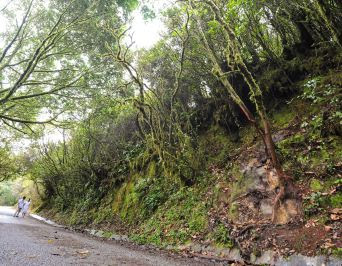
Mystical: A view of the Mossy Forest in Cameron Highlands.
Renovation works, which started since October last year, should be completed by the end of the month, he added.
Improved scenic boardwalk to be completed this month
By Fong Kee Soon
Friday February 17, 2012
A LOOP is being added to the Mossy Forest boardwalk at Gunung Brinchang in Cameron Highlands to prevent visitors from getting lost.
Regional Environmental Awareness Cameron Highlands (REACH) president R. Ramasamy said the loop leads back to the entrance of the 200m-long boardwalk.
"In the past, some visitors lost their way because they wandered off the boardwalk amidst the misty environment.
"Missing planks and vandalised ropes along the boardwalk's wooden platforms are also being replaced," Ramasamy told The Star.

Mystical: A view of the Mossy Forest in Cameron Highlands.
Renovation works, which started since October last year, should be completed by the end of the month, he added.
Collecting Cameron Highlands Hillslope Water for Health
Often when I go to Cameron Highlands, I see people collecting water from the hillslope. I have heard that the water is considered healthy because of the perception of being sourced naturally from nature. Yet on the other hand we do not know the actual source and whether there is any contamination to the water collected. Of course people want to improve their health wherever possible and if it worked for them, they will collect it and drink it. Personally I'm not so keen to drink it unless absolutely no choice (such as going jungle hiking and camping), Anyway it is good to know and keep in view.
Frequent water collectors speak of its boost in energy
Story and photos by Fong Kee Soon
Friday February 17, 2012
FOR more than a decade now, people have been flocking to collect free mineral water from a hillslope at KM10 of the Simpang Pulai-Kampung Raja road leading up to Cameron Highlands.
They believe that the water is therapeutic and can ease joint pains as well as able to boost the energy and stamina of those who consume it.
Auxiliary policeman Zaine Mohd Silan would head out to the spot once a month with enough plastic bottles to collect some 100 litres of water. It is a chore the 56-year-old has been carrying out for the last 10 years.

For consumption: Nor Suhaimi showing two large
plastic bottles filled with the mineral water.
He believes wholeheartedly that the water is safe as it is crystal clear and leaves no residue at the bottom of the containers even after some time.
"Rice cooked with the water also stays fresh longer," he claimed, adding that the water had never made him sick.
The water, added Zaine, has never stopped flowing all these years.
Frequent water collectors speak of its boost in energy
Story and photos by Fong Kee Soon
Friday February 17, 2012
FOR more than a decade now, people have been flocking to collect free mineral water from a hillslope at KM10 of the Simpang Pulai-Kampung Raja road leading up to Cameron Highlands.
They believe that the water is therapeutic and can ease joint pains as well as able to boost the energy and stamina of those who consume it.
Auxiliary policeman Zaine Mohd Silan would head out to the spot once a month with enough plastic bottles to collect some 100 litres of water. It is a chore the 56-year-old has been carrying out for the last 10 years.

For consumption: Nor Suhaimi showing two large
plastic bottles filled with the mineral water.
He believes wholeheartedly that the water is safe as it is crystal clear and leaves no residue at the bottom of the containers even after some time.
"Rice cooked with the water also stays fresh longer," he claimed, adding that the water had never made him sick.
The water, added Zaine, has never stopped flowing all these years.
Wednesday, February 15, 2012
Confusing signs on the Camerons road
Confusing signs on the Camerons road
Wednesday February 15, 2012
RECENTLY, my family and I went on a trip to Cameron Highlands. We travelled via Simpang Pulai and on the way we observed two road signs that kept appearing along the road and the two always appeared together (as seen in the photo) [editor: didn't find the photo...].
The first road sign, a white circle with a black diagonal stripe always comes first and a few metres away, is a road sign indicating a 50kph speed limit.
My dad recognised the first as a sign indicating the National Speed Limit, which means the speed limit for cars is 60mph on single carriageways and 70mph on dual carriageways and motorways.
May I ask the Road Transport Department why are the road signs contradicting one another? The road to the Camerons is the only road where I have observed this particular placement of such road signs.
PEACH,
Shah Alam.
Wednesday February 15, 2012
RECENTLY, my family and I went on a trip to Cameron Highlands. We travelled via Simpang Pulai and on the way we observed two road signs that kept appearing along the road and the two always appeared together (as seen in the photo) [editor: didn't find the photo...].
The first road sign, a white circle with a black diagonal stripe always comes first and a few metres away, is a road sign indicating a 50kph speed limit.
My dad recognised the first as a sign indicating the National Speed Limit, which means the speed limit for cars is 60mph on single carriageways and 70mph on dual carriageways and motorways.
May I ask the Road Transport Department why are the road signs contradicting one another? The road to the Camerons is the only road where I have observed this particular placement of such road signs.
PEACH,
Shah Alam.
Monday, January 23, 2012
Petrol Stations in Cameron Highlands - More needed
You can only get petrol from two towns - Ringlet and Brinchang. If I recall correctly, you can find Shell station in Ringlet and Brinchang and Petronas in Brinchang. I don't ever recall any petrol stations was ever set up in Tanah Rata since long time ago, so I suppose this DAP deputy chairman must have recalled it from his earlier days. Anyway, Cameron Highlands is not a big place and may not be economically viable for more petrol stations, yet on the other hand on peak periods, you do need to queue up for your turn at the pump especially Shell which is more popular than Petronas. Anyway, will see how this work out...
DAP man calls for more petrol stations in Cameron Highlands
Monday January 23, 2012
Compiled by Beh Yuen Hui, Joseph Kaos Jr, A.Raman
PAHANG DAP deputy chairman J. Simmathri has called for more petrol stations to be set up in Cameron Highlands, reported Makkal Osai.
He said more stations were needed because many motorists had difficulty getting fuel at the popular tourist site.
"There is no petrol station in Camerons, while two petrol stations in Tanah Rata have been converted into parking and business areas," he added.
Simmathri said the Government should consider giving approval for petrol stations in Blue Valley and Tanah Rata, which would not only benefit the locals, but also tourists who come in the thousands to the area. -- The Star News
DAP man calls for more petrol stations in Cameron Highlands
Monday January 23, 2012
Compiled by Beh Yuen Hui, Joseph Kaos Jr, A.Raman
PAHANG DAP deputy chairman J. Simmathri has called for more petrol stations to be set up in Cameron Highlands, reported Makkal Osai.
He said more stations were needed because many motorists had difficulty getting fuel at the popular tourist site.
"There is no petrol station in Camerons, while two petrol stations in Tanah Rata have been converted into parking and business areas," he added.
Simmathri said the Government should consider giving approval for petrol stations in Blue Valley and Tanah Rata, which would not only benefit the locals, but also tourists who come in the thousands to the area. -- The Star News
Monday, January 16, 2012
More expensive vegetables due to poor weather
Whenever it rains too much, we get vegetable shortage as the harvest from the farmers reduced. And that means price increase. No choice but to pay for it, we still need to eat. When it comes to food prices, not just vegetables, but a wide variety of food items has been increasing price for the past many years due to many factors not just due to poor harvest from bad weather, but also from transportation affected by soaring petroleum which affect fuel for transportation, which in turns affect cost of living and you know, the cycle continues. The problem is when the increase of cost far outstrip the income earned, it means we are getting poorer everyday due to shrinking value of money. That's inflation, when price goes up, it seldom comes down, but our wages hardly ever goes up...
Having the blues over greens
Monday January 16, 2012
KUALA LUMPUR: Chinese New Year, a time to usher in prosperity and good fortune, will be a costly affair this year.
The reunion dinner, considered one of the main events, will be more expensive with vegetable prices continuing to soar due to the smaller harvest.
It is especially bad this time because heavy rains in Cameron Highlands have caused the supply of greens to drop.
The problem has been compounded with China, India and Thailand – on which Malaysia depends a lot for the import of vegetables – exporting less as they too are facing bad weather conditions.

Remaining unperturbed: Despite the price hike,
consumers are still willing to splurge on the greens.
Local vegetable growers are lamenting that production has hit an all-time low this season, with many saying output had dropped by 40%.
Having the blues over greens
Monday January 16, 2012
KUALA LUMPUR: Chinese New Year, a time to usher in prosperity and good fortune, will be a costly affair this year.
The reunion dinner, considered one of the main events, will be more expensive with vegetable prices continuing to soar due to the smaller harvest.
It is especially bad this time because heavy rains in Cameron Highlands have caused the supply of greens to drop.
The problem has been compounded with China, India and Thailand – on which Malaysia depends a lot for the import of vegetables – exporting less as they too are facing bad weather conditions.

Remaining unperturbed: Despite the price hike,
consumers are still willing to splurge on the greens.
Local vegetable growers are lamenting that production has hit an all-time low this season, with many saying output had dropped by 40%.
Tuesday, November 08, 2011
Cameron Highlands vegetable prices going up
Cameron Highlands vegetable prices going up adding to the raising prices of many food essential is adding to the woes of people in Malaysia. My mom-in-law is sure going to complain a lot since she does the marketing!
As for me, I have seen the general prices of food increasing in leaps and bounds! Just last weekend my wife went to purchase a can of sweetened condense milk and she said it was so expensive. She recalled buying it for around RM2, but now she paid about RM3 for it. Now that's about 33% increase!
And yet the Government is still spewing out imaginary CPI index of 5%. In their attempt to show that the country living index is stable to woo in foreigners perhaps to take up MM2H, they forget the real tax contributors are the majority that live and work in Malaysia!

Manpower woe in Cameron Highlands partly to blame for rising veggie prices
Tuesday November 8, 2011
IPOH: The rising prices of vegetables in the country is not solely due to the floods in Thailand or current monsoon season, said the Cameron Highlands Vegetable Growers Association's secretary-general Chay Ee Mong.
As for me, I have seen the general prices of food increasing in leaps and bounds! Just last weekend my wife went to purchase a can of sweetened condense milk and she said it was so expensive. She recalled buying it for around RM2, but now she paid about RM3 for it. Now that's about 33% increase!
And yet the Government is still spewing out imaginary CPI index of 5%. In their attempt to show that the country living index is stable to woo in foreigners perhaps to take up MM2H, they forget the real tax contributors are the majority that live and work in Malaysia!

Manpower woe in Cameron Highlands partly to blame for rising veggie prices
Tuesday November 8, 2011
IPOH: The rising prices of vegetables in the country is not solely due to the floods in Thailand or current monsoon season, said the Cameron Highlands Vegetable Growers Association's secretary-general Chay Ee Mong.
Friday, August 26, 2011
Simpang Pulai Road to be repaired by Public Works Dept
Hey guys, do be careful when using the Simpang Pulai Road to Cameron Highlands. Apparently there is a stretch that is prone to soil movement and thus landslide. Hopefully the Public Works Department will be able to make repairs to avoid any mishap.
So far while travelling, I seldom think about such so much and leave it to God for journey mercies. So far my trips to Cameron Highlands has been incident free, though I do encounter mad drivers speeding down as though they are Tokyo drifters or what.
Anyway do take care and drive safe!
Cheers!
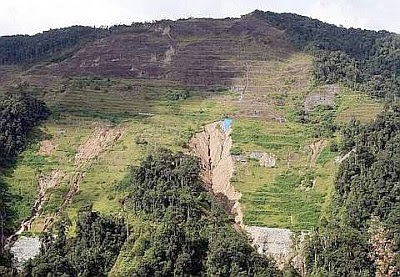
Safety threat: An overall view of the hillslope affected by
massive erosion along a section of the Simpang Pulai-Cameron Highlands
road near the Perak-Pahang border.
PWD to repair Simpang Pulai-Camerons road
By Sylvia Looi
Friday August 26, 2011
IPOH: The state Public Works Department (PWD) will spend RM16mil to carry out repairs on the KM43 to KM47 stretch of the Simpang Pulai-Cameron Highlands road.
Perak PWD director Datuk Dr Safry Kamal said the project would be implemented in three phases, of which RM4mil would be used to repair a barren slope at a part of the stretch.
He added that the remaining amount from the special allocation given by the Works Minister, would be spent next year.
Dr Safry said the department was closely monitoring the slope which had suffered massive erosion.
"Our slope engineering branch will alert us if there is any soil movement in that area," he said.
He added that a patrol team was also stationed there 24 hours daily.
"We will seal the road if it endangers motorists," he added.
He advised motorists to be vigilant when travelling on the stretch of the road, adding that new signage would be placed there to alert motorists. -- The Star News
So far while travelling, I seldom think about such so much and leave it to God for journey mercies. So far my trips to Cameron Highlands has been incident free, though I do encounter mad drivers speeding down as though they are Tokyo drifters or what.
Anyway do take care and drive safe!
Cheers!

Safety threat: An overall view of the hillslope affected by
massive erosion along a section of the Simpang Pulai-Cameron Highlands
road near the Perak-Pahang border.
PWD to repair Simpang Pulai-Camerons road
By Sylvia Looi
Friday August 26, 2011
IPOH: The state Public Works Department (PWD) will spend RM16mil to carry out repairs on the KM43 to KM47 stretch of the Simpang Pulai-Cameron Highlands road.
Perak PWD director Datuk Dr Safry Kamal said the project would be implemented in three phases, of which RM4mil would be used to repair a barren slope at a part of the stretch.
He added that the remaining amount from the special allocation given by the Works Minister, would be spent next year.
Dr Safry said the department was closely monitoring the slope which had suffered massive erosion.
"Our slope engineering branch will alert us if there is any soil movement in that area," he said.
He added that a patrol team was also stationed there 24 hours daily.
"We will seal the road if it endangers motorists," he added.
He advised motorists to be vigilant when travelling on the stretch of the road, adding that new signage would be placed there to alert motorists. -- The Star News
Subscribe to:
Posts (Atom)