Estate workers go three months without salaries
Monday March 29, 2010
WORKERS at Blue Valley Tea Estate in Cameron Highlands have not been paid their salaries for the past three months, highlighted Tamil Nesan.
It quoted Blue Valley MIC branch chief S. Cheran as saying that the matter was brought to their attention and a report had been submitted to the Human Resources Ministry.
He said the workers received many benefits when the estate was managed by the National Land Finance Cooperative Society, but the benefits were reduced and salaries were paid late when it was sold to a private company.
Production of tea leaves had stopped temporarily and the workers were assigned to do outdoor work, he said, adding that the workers were also facing various health and housing problems. -- The Star Compilation
Monday, March 29, 2010


Saturday, March 27, 2010
REACH Cameron Highlands
REACH-ing out
Saturday March 27, 2010
Cameron Highlands has been experiencing accelerated growth, especially over the past two decades that, while beneficial to the local economy, is threatening the area with environmental degradation.
Part of this can be attributed to poor planning and enforcement.
Landslides, silted rivers and dams, constant water disruptions and poor water quality have become common issues in this picturesque highland retreat.
Alarmed by the rapidly deteriorating environment, especially the declining water quality and deforestation, a group of Cameron Highlands residents decided to form Regional Environmental Awareness Cameron Highlands or REACH in 2001.
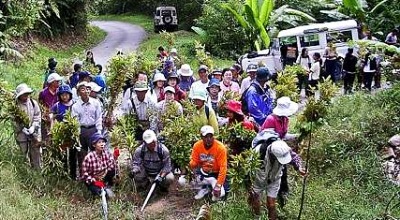
Giving Mother Nature a hand: REACH volunteers planting tree saplings to counter deforestation in Cameron Highlands
"It all began back in 2000 when laboratory testings confirmed the presence of E. coli, a bacterium that’s a health hazard, in our treated drinking water," says REACH president Ramakrishnan Ramasamy, 45.
"As there were farms located above the water catchment areas, we collected water samples and did further tests. We were shocked to find that not only did they show presence of animal faeces, there was human waste as well due to the lack of proper sanitation by farm workers!
"The authorities promised to shut down the 68 farms but till now, nothing much has been done. We have no problems with farming but we are concerned when the farms are located above the water catchment areas," he adds.
REACH reports that 97% of Earth’s water is salty or otherwise undrinkable and almost 3% is locked away in ice caps and glaciers or deep underground. It is estimated that only 0.003% is actually available for use. Mountain areas are the main sources for fresh water, and so must be protected.
REACH is also worried about recent findings that show the presence of DDT in the rivers, a synthetic pesticide for controlling malaria that is banned in most developed countries.
"As DDT is banned in Malaysia, we suspect that it is smuggled from neighbouring countries and mixed into local pesticides. It has a half-life of up to 100 years, which is very detrimental to the environment and our health in the long run. We will publish a full report when we have compiled more facts," says Ramakrishnan.
Besides highlighting the water issues in Cameron Highlands, REACH’s other two core concerns are reforestation and recycling.
"We are working with the foresty department, corporate companies and organisations on an on-going project to reforest a 17ha site at Hulu Bertam Forest Reserve, Gunung Brinchang.
"Planting endemic tree saplings ensures that the original biodiversity of the area is retained," explains Ramakrishnan.
Their recycling project has also gained momentum due to overwhelming response from the community.
"We have set up many collection centres all across town and we have a compactor site where recyclables are compacted to facilitate easier transportation to factories in Ipoh and Kuala Lumpur," reveals Ramakrishnan.
Many hotels and schools in Cameron Highlands are already involved in the programme, encouraging recycling via buy-back schemes and creating awareness through talks.
REACH published Wild Orchids Of Cameron Highlands last year, a coffeetable book featuring the 630 wild orchid species of Cameron Highlands.
"Our committee took eight years to work on this book. Plans are also afoot to set up a wild orchid sanctuary to house wild orchids confiscated from poachers," he says.
REACH is run by a group of volunteers with funds from membership, donations, small grants, reforestation activities and sales of souvenirs. Visit www.reach.org.my to become a volunteer or for more details.
Saturday March 27, 2010
Cameron Highlands has been experiencing accelerated growth, especially over the past two decades that, while beneficial to the local economy, is threatening the area with environmental degradation.
Part of this can be attributed to poor planning and enforcement.
Landslides, silted rivers and dams, constant water disruptions and poor water quality have become common issues in this picturesque highland retreat.
Alarmed by the rapidly deteriorating environment, especially the declining water quality and deforestation, a group of Cameron Highlands residents decided to form Regional Environmental Awareness Cameron Highlands or REACH in 2001.
Giving Mother Nature a hand: REACH volunteers planting tree saplings to counter deforestation in Cameron Highlands
"It all began back in 2000 when laboratory testings confirmed the presence of E. coli, a bacterium that’s a health hazard, in our treated drinking water," says REACH president Ramakrishnan Ramasamy, 45.
"As there were farms located above the water catchment areas, we collected water samples and did further tests. We were shocked to find that not only did they show presence of animal faeces, there was human waste as well due to the lack of proper sanitation by farm workers!
"The authorities promised to shut down the 68 farms but till now, nothing much has been done. We have no problems with farming but we are concerned when the farms are located above the water catchment areas," he adds.
REACH reports that 97% of Earth’s water is salty or otherwise undrinkable and almost 3% is locked away in ice caps and glaciers or deep underground. It is estimated that only 0.003% is actually available for use. Mountain areas are the main sources for fresh water, and so must be protected.
REACH is also worried about recent findings that show the presence of DDT in the rivers, a synthetic pesticide for controlling malaria that is banned in most developed countries.
"As DDT is banned in Malaysia, we suspect that it is smuggled from neighbouring countries and mixed into local pesticides. It has a half-life of up to 100 years, which is very detrimental to the environment and our health in the long run. We will publish a full report when we have compiled more facts," says Ramakrishnan.
Besides highlighting the water issues in Cameron Highlands, REACH’s other two core concerns are reforestation and recycling.
"We are working with the foresty department, corporate companies and organisations on an on-going project to reforest a 17ha site at Hulu Bertam Forest Reserve, Gunung Brinchang.
"Planting endemic tree saplings ensures that the original biodiversity of the area is retained," explains Ramakrishnan.
Their recycling project has also gained momentum due to overwhelming response from the community.
"We have set up many collection centres all across town and we have a compactor site where recyclables are compacted to facilitate easier transportation to factories in Ipoh and Kuala Lumpur," reveals Ramakrishnan.
Many hotels and schools in Cameron Highlands are already involved in the programme, encouraging recycling via buy-back schemes and creating awareness through talks.
REACH published Wild Orchids Of Cameron Highlands last year, a coffeetable book featuring the 630 wild orchid species of Cameron Highlands.
"Our committee took eight years to work on this book. Plans are also afoot to set up a wild orchid sanctuary to house wild orchids confiscated from poachers," he says.
REACH is run by a group of volunteers with funds from membership, donations, small grants, reforestation activities and sales of souvenirs. Visit www.reach.org.my to become a volunteer or for more details.
Tuesday, March 23, 2010
Jim Thompson Thai Silk King
And yet another conspiracy story about Jim Thompson, the Thai Silk King. Nobody knows for sure what happened to him and probably never will considering that there is just isn't enough evidence about what transpired on that day. Still there will be people who just loves a good mystery and will come with a conspiracy theory of their own. And so we have another angle to the disappearance of Jim Thompson!
Looking for the Silk King
By Foong Thim Leng
Tuesday March 23, 2010
New theories emerge about Jim Thompson's disappearance over 40 years ago.
IT has been 43 years since Thai Silk King Jim Thompson went missing in the jungles of Cameron Highlands but the hills are still buzzing with tales of what could have happened to him.
Some of the theories on Thompson's disappearance contain conspiracies fit for a spy movie, while others are too ludicrous to believe.
Recently, a mundane story came out of Cameron Highlands that Thompson's disappearance was a simple road accident.
"An alternative story says the culprit was driving a timber lorry and the body was disposed of at a sawmill," he said in an interview.
Rivers said he first heard of the intriguing Thompson case when he came to the highlands over 20 years ago.
"The story is so famous that in London alone, there are about 20 bars and restaurants serving Thai dishes and food from Asian countries named after Jim Thompson.
"Even the Strawberry Park Resort in Cameron Highlands has the Jim Thompson Terrace, a restaurant with a Jim Thompson hamburger as one of the items on its menu," he said.
Today, tourists are still queuing up daily to visit the Jim Thompson Thai House (Museum) in Rama Road 1, Bangkok, although many do not know that Cameron Highlands is in Malaysia.

As the story goes, Thompson had come to the highlands with his close Thai friend Mrs Connie Mangskau less than a week after his 61st birthday in 1967 to spend an Easter weekend with friends, Dr T.G. and Mrs Helen Ling of Singapore at their holiday bungalow, Moonlight Cottage, located above the golf course in Tanah Rata.
He and his friends attended church service on Easter Sunday which fell on March 26 that year and then had a picnic before returning to the bungalow. Thompson was last seen standing at the verandah. Despite a massive search that followed, he was never found.
Tales of his disappearance then spread like wildfire.
"Pundits pontificated that Thompson was a CIA agent embroiled in Thai politics, because of his wartime service in the OSS (Office of Strategic Services).
"He was also labelled a man of mystery, a soldier of fortune and even a spy, becoming a double agent working for the Chinese communists. Conversely, they whisked him away to settle the war in Vietnam or to revive the silk trade in China.
"His wartime service was exaggerated to turn him into a skilled jungle fighter who had been behind Japanese lines in Burma or directed the Thai underground.
"That is all nonsense," said Rivers who has carried out research on Thompson.
Rivers said the case attracted a host of practitioners of the occult arts, including mediums, clairvoyants, bomoh, soothsayers, astrologers and palmists.
One of them, Peter Hurkos, was a private investigator said to be a telepathy expert from Los Angeles, hired by the Thompson family.
His credentials were that he had assisted the police in search of the mysterious killer in the Boston Strangler case.
It was also said that he had crushed the scepticism of a non-believer in Boston by telling a young policeman correctly that he had been making love to his wife on the kitchen table a few hours ago.
His spiel was that Thompson had been drugged unconscious, abducted and flown off to Cambodia.

But when he was told that there was no landing strip, the story was amended to include an equally impossible boat ride to a neighbouring state for the plane trip.
Beside Hurkos, a swamp of mediums and mystic psychics swept through the jungle and came out with an assortment of sinister possibilities.
Retired Deputy Supt Ismail Hashim, 85, who was the OCPD in Cameron Highlands then, said he logged 118 such people but many others came later.
"They were of all races and nationalities and many had come all the way from Thailand, Singapore and Indonesia. Some even posted in their predictions.
"For days, the hills were alive with the sound of incantations, gongs and firecrackers to ward off evil spirits.
Strawberry Park Resort resident manager Lim Wai Ming said the story circulating in Ringlet was that on his death bed, an elderly farmer confessed to his family to ease his conscience that he had once knocked down and killed a European man and buried him in an unmarked grave.
However, the cliff-hanger was that he died before he could gasp out where the body was buried.
Long-time resident of the highlands Capt Philip J. Rivers said it was a credible story.
Rivers is a master mariner, lecturer in nautical studies, and a former insurance fraud investigator. He is also the author of the book, ‘1421' Voyages: Fact and Fantasy, published by the Perak Academy.
"In 1967, it was rumoured that a lorry had struck Thompson on the road but this was not reported to the police.
"It was said that the driver in his panic placed the body on to the back of his vehicle, drove off and buried the body in the outskirts of a vegetable patch.
"The stories were that Thompson was either eaten by a tiger, leopard or a wild boar, gulped down by a python or swallowed by quicksand.
"Others argued that the orang asli had accidentally killed him with a dart from a blow pipe, some said he had fallen into an animal trap," said Ismail.
He said a ridiculous tale featured Thompson in a cannibal feast but the most amusing of all was that a tribal "princess" kept him imprisoned as a "love slave".
Rivers said there were quarters who claimed that the police were slow in their investigations and had only done a "cosmetic search" for Thompson because of the conspiracy theories.
"From what I have learnt, the police had done a thorough search for Thompson, and Ismail had been on the scene immediately on the evening after receiving a report," said Rivers.
"Practically all police units, including the Special Branch, CID, Police Field Force, orang asli from Senoi Praaq and the Jubah teams had swept the jungle and the highlands during investigations.
"Experts on secret societies were also sent up to check whether Thompson could have been kidnapped. A woman inspector, Tan Ai Bee, was sent to stay with the women at Moonlight Cottage on the pretext of offering protection to determine whether Thompson's disappearance had something to do with domestic matters," said Rivers.
Others involved in the search included a British Military Police sergeant and a small detachment, convalescents from the British Military Hospital, local residents, missionaries, students from the American School, tourists and golfers, two Dayak Rangers with a tracker dog and two Danish friends of Thompson from Bangkok.
Even former adviser to the Malayan Aborigine Department, the famous Richard Noone, hired by the Thai Silk Company, failed to locate Thompson after a search with orang asli despite his extensive knowledge of Cameron Highlands both before the war and during the Emergency.
Noone's final observation was that "Mr Thompson was not in the jungle, dead or alive as he would certainly be found by now."
"The possibilities have narrowed to Thompson accidentally meeting his death and his remains lay undetected somewhere in the Cameron Highlands," said Rivers.
Rivers will be giving a talk entitled He Never Left The Hills – The Real Search For Jim Thompson, organised by the Perak Academy at Syuen Hotel, Ipoh, at 7.30pm on Friday. For reservations, contact 05-547 8949/016-551 8172. -- The Star.
Looking for the Silk King
By Foong Thim Leng
Tuesday March 23, 2010
New theories emerge about Jim Thompson's disappearance over 40 years ago.
IT has been 43 years since Thai Silk King Jim Thompson went missing in the jungles of Cameron Highlands but the hills are still buzzing with tales of what could have happened to him.
Some of the theories on Thompson's disappearance contain conspiracies fit for a spy movie, while others are too ludicrous to believe.
Recently, a mundane story came out of Cameron Highlands that Thompson's disappearance was a simple road accident.
"An alternative story says the culprit was driving a timber lorry and the body was disposed of at a sawmill," he said in an interview.
Rivers said he first heard of the intriguing Thompson case when he came to the highlands over 20 years ago.
"The story is so famous that in London alone, there are about 20 bars and restaurants serving Thai dishes and food from Asian countries named after Jim Thompson.
"Even the Strawberry Park Resort in Cameron Highlands has the Jim Thompson Terrace, a restaurant with a Jim Thompson hamburger as one of the items on its menu," he said.
Today, tourists are still queuing up daily to visit the Jim Thompson Thai House (Museum) in Rama Road 1, Bangkok, although many do not know that Cameron Highlands is in Malaysia.

Captain Philip J. Rivers at the verandah of Moonlight Cottage where Jim Thompson was last seen in 1967.
As the story goes, Thompson had come to the highlands with his close Thai friend Mrs Connie Mangskau less than a week after his 61st birthday in 1967 to spend an Easter weekend with friends, Dr T.G. and Mrs Helen Ling of Singapore at their holiday bungalow, Moonlight Cottage, located above the golf course in Tanah Rata.
He and his friends attended church service on Easter Sunday which fell on March 26 that year and then had a picnic before returning to the bungalow. Thompson was last seen standing at the verandah. Despite a massive search that followed, he was never found.
Tales of his disappearance then spread like wildfire.
"Pundits pontificated that Thompson was a CIA agent embroiled in Thai politics, because of his wartime service in the OSS (Office of Strategic Services).
"He was also labelled a man of mystery, a soldier of fortune and even a spy, becoming a double agent working for the Chinese communists. Conversely, they whisked him away to settle the war in Vietnam or to revive the silk trade in China.
"His wartime service was exaggerated to turn him into a skilled jungle fighter who had been behind Japanese lines in Burma or directed the Thai underground.
"That is all nonsense," said Rivers who has carried out research on Thompson.
Rivers said the case attracted a host of practitioners of the occult arts, including mediums, clairvoyants, bomoh, soothsayers, astrologers and palmists.
One of them, Peter Hurkos, was a private investigator said to be a telepathy expert from Los Angeles, hired by the Thompson family.
His credentials were that he had assisted the police in search of the mysterious killer in the Boston Strangler case.
It was also said that he had crushed the scepticism of a non-believer in Boston by telling a young policeman correctly that he had been making love to his wife on the kitchen table a few hours ago.
His spiel was that Thompson had been drugged unconscious, abducted and flown off to Cambodia.

Jim Thompson pondering over one of his silk designs at a tropical garden in Bangkok in 1965.
But when he was told that there was no landing strip, the story was amended to include an equally impossible boat ride to a neighbouring state for the plane trip.
Beside Hurkos, a swamp of mediums and mystic psychics swept through the jungle and came out with an assortment of sinister possibilities.
Retired Deputy Supt Ismail Hashim, 85, who was the OCPD in Cameron Highlands then, said he logged 118 such people but many others came later.
"They were of all races and nationalities and many had come all the way from Thailand, Singapore and Indonesia. Some even posted in their predictions.
"For days, the hills were alive with the sound of incantations, gongs and firecrackers to ward off evil spirits.
Strawberry Park Resort resident manager Lim Wai Ming said the story circulating in Ringlet was that on his death bed, an elderly farmer confessed to his family to ease his conscience that he had once knocked down and killed a European man and buried him in an unmarked grave.
However, the cliff-hanger was that he died before he could gasp out where the body was buried.
Long-time resident of the highlands Capt Philip J. Rivers said it was a credible story.
Rivers is a master mariner, lecturer in nautical studies, and a former insurance fraud investigator. He is also the author of the book, ‘1421' Voyages: Fact and Fantasy, published by the Perak Academy.
"In 1967, it was rumoured that a lorry had struck Thompson on the road but this was not reported to the police.
"It was said that the driver in his panic placed the body on to the back of his vehicle, drove off and buried the body in the outskirts of a vegetable patch.
"The stories were that Thompson was either eaten by a tiger, leopard or a wild boar, gulped down by a python or swallowed by quicksand.
"Others argued that the orang asli had accidentally killed him with a dart from a blow pipe, some said he had fallen into an animal trap," said Ismail.
He said a ridiculous tale featured Thompson in a cannibal feast but the most amusing of all was that a tribal "princess" kept him imprisoned as a "love slave".
Rivers said there were quarters who claimed that the police were slow in their investigations and had only done a "cosmetic search" for Thompson because of the conspiracy theories.
"From what I have learnt, the police had done a thorough search for Thompson, and Ismail had been on the scene immediately on the evening after receiving a report," said Rivers.
"Practically all police units, including the Special Branch, CID, Police Field Force, orang asli from Senoi Praaq and the Jubah teams had swept the jungle and the highlands during investigations.
"Experts on secret societies were also sent up to check whether Thompson could have been kidnapped. A woman inspector, Tan Ai Bee, was sent to stay with the women at Moonlight Cottage on the pretext of offering protection to determine whether Thompson's disappearance had something to do with domestic matters," said Rivers.
Others involved in the search included a British Military Police sergeant and a small detachment, convalescents from the British Military Hospital, local residents, missionaries, students from the American School, tourists and golfers, two Dayak Rangers with a tracker dog and two Danish friends of Thompson from Bangkok.
Even former adviser to the Malayan Aborigine Department, the famous Richard Noone, hired by the Thai Silk Company, failed to locate Thompson after a search with orang asli despite his extensive knowledge of Cameron Highlands both before the war and during the Emergency.
Noone's final observation was that "Mr Thompson was not in the jungle, dead or alive as he would certainly be found by now."
"The possibilities have narrowed to Thompson accidentally meeting his death and his remains lay undetected somewhere in the Cameron Highlands," said Rivers.
Rivers will be giving a talk entitled He Never Left The Hills – The Real Search For Jim Thompson, organised by the Perak Academy at Syuen Hotel, Ipoh, at 7.30pm on Friday. For reservations, contact 05-547 8949/016-551 8172. -- The Star.
Thursday, February 25, 2010
Strawberry Farm in Genting Highlands
Strawberry lure at Genting
Story and photos by Nik Naizi Husin
Thursday February 25, 2010
Bentong: Genting Highlands has new attractions for the droves of tourists who visit its theme parks and casino. It is now also home to strawberry and orchid farms.
Genting Strawberry Leisure Farms chief executive K.C. Chung said his farm was conceptualised a year ago to diversify the tourism products in Genting Highlands.
“Cameron Highlands is famous for its strawberries and people travel there to visit its many big farms.

“Although our farm is just a little over 2ha, we optimised the use of space with the help of friends who are experts in farming besides my own experience.
“The local tourism industry can keep growing if the players are creative in coming up with new ideas,” he said.

He said that Genting Highlands appealed to visitors for its cool climate and theme park and now the strawberry farm as well.
“At my farm, visitors can pick strawberries, vegetables and mushrooms by themselves,” he said.
There are several types of mushrooms growing at the farm.
Chung said the farm was crowded during school holidays as admission was free.

Some 3km up the road leading to Awana Genting is an orchid farm.
It is a little hidden and many visitors are unaware of it, but orchid lovers have known about The World of Phalaenopsis for years.
Some 50 species thrive on the 0.4ha there.
It was established by Y.K. Yap, who started collecting and growing orchids as a hobby until he realised he had enough of them to start a small farm. -- The StarMetro

Footnote: I think I saw their farm on the way down from First World Hotel. Maybe next time might give it a visit and look see. Something nearer to KL folks rather than travel so far to Cameron Highlands to see strawberry farm. Then again, Cameron Highlands is more soothing with all the greenery than Genting Highlands, eh? - Jan.
Story and photos by Nik Naizi Husin
Thursday February 25, 2010
Bentong: Genting Highlands has new attractions for the droves of tourists who visit its theme parks and casino. It is now also home to strawberry and orchid farms.
Genting Strawberry Leisure Farms chief executive K.C. Chung said his farm was conceptualised a year ago to diversify the tourism products in Genting Highlands.
“Cameron Highlands is famous for its strawberries and people travel there to visit its many big farms.

Getting ripe: Chung showing the unplucked strawberries at his farm in Genting Highlands recently.
“Although our farm is just a little over 2ha, we optimised the use of space with the help of friends who are experts in farming besides my own experience.
“The local tourism industry can keep growing if the players are creative in coming up with new ideas,” he said.

Full blossoms: Genting Highlands in Pahang is not just known for its theme park and casino as it is attracting tourists to an orchid farm and a strawberry farm in its locality.
He said that Genting Highlands appealed to visitors for its cool climate and theme park and now the strawberry farm as well.
“At my farm, visitors can pick strawberries, vegetables and mushrooms by themselves,” he said.
There are several types of mushrooms growing at the farm.
Chung said the farm was crowded during school holidays as admission was free.

For leisure: An attraction at the farm is this bamboo hut.
Some 3km up the road leading to Awana Genting is an orchid farm.
It is a little hidden and many visitors are unaware of it, but orchid lovers have known about The World of Phalaenopsis for years.
Some 50 species thrive on the 0.4ha there.
It was established by Y.K. Yap, who started collecting and growing orchids as a hobby until he realised he had enough of them to start a small farm. -- The StarMetro

Optimum land use; The rows of the strawberry plants at the farm.
Footnote: I think I saw their farm on the way down from First World Hotel. Maybe next time might give it a visit and look see. Something nearer to KL folks rather than travel so far to Cameron Highlands to see strawberry farm. Then again, Cameron Highlands is more soothing with all the greenery than Genting Highlands, eh? - Jan.
Wednesday, January 20, 2010
Vegetables to cost more during CNY
Shortage of supply may raise prices of greens
By Foong Thim Leng
Wednesday January 20, 2010
Cameron Highlands: Prices of vegetables with names that symbolise good tidings are expected to go up during Chinese New Year because of higher demand and lower supply.
Supply of the vegetables is expected to be lower because farms here were recently affected by bad weather, said Cameron Highlands Vegetable Growers Association secretary-general Chay Ee Mong.
These include pak choy (cabbage – which gives the meaning of wealth), sang choy (lettuce – longevity), spring onions (chung – wisdom) and leeks (suan, which rhymes with "counting" in Mandarin).
Chay said demand for local vegetables would also increase as imports from China were expected to cost 30% more because heavy snowfall there resulted in poor harvests.
"We expect imports to be less as China has to feed its own population," he said in an interview.
Chay added that the price of leafy greens such as sawi from the highlands was affected by the big production of the vegetable from lowland farmers.
Vege prices up, pork to cost more due to high demand and low supply
Chinese New Year reunion dinners and other festive meals are going to cost more as prices of popular festive vegetables and pork keep escalating.
Cameron Highlands Vegetable Growers Association secretary-general Chay Ee Mong said prices of pak choy (cabbage), sang choy (lettuce) and suan (leeks) — vegetables that symbolise good tidings — are expected to increase by as much as 30% due to high demand and low supply.
Prices of live pigs have risen by 4% since last October, from RM730 per 100kg to RM760, and the price of pork from RM14 to RM22 per kg during the same period because of a reduction in porkers (adult pigs) by breeders due to disease and culling of old sows.
To stabilise the rising pork prices the Veterinary Services Department has stepped in to relax the import conditions for pork and pork-based products, while the Domestic Trade and Consumer Affairs Ministry will for the first time put pork under the price control list along with sugar and other essential items for Chinese New Year. -- The Star News.
By Foong Thim Leng
Wednesday January 20, 2010
Cameron Highlands: Prices of vegetables with names that symbolise good tidings are expected to go up during Chinese New Year because of higher demand and lower supply.
Supply of the vegetables is expected to be lower because farms here were recently affected by bad weather, said Cameron Highlands Vegetable Growers Association secretary-general Chay Ee Mong.
These include pak choy (cabbage – which gives the meaning of wealth), sang choy (lettuce – longevity), spring onions (chung – wisdom) and leeks (suan, which rhymes with "counting" in Mandarin).
Chay said demand for local vegetables would also increase as imports from China were expected to cost 30% more because heavy snowfall there resulted in poor harvests.
"We expect imports to be less as China has to feed its own population," he said in an interview.
Chay added that the price of leafy greens such as sawi from the highlands was affected by the big production of the vegetable from lowland farmers.
Vege prices up, pork to cost more due to high demand and low supply
Chinese New Year reunion dinners and other festive meals are going to cost more as prices of popular festive vegetables and pork keep escalating.
Cameron Highlands Vegetable Growers Association secretary-general Chay Ee Mong said prices of pak choy (cabbage), sang choy (lettuce) and suan (leeks) — vegetables that symbolise good tidings — are expected to increase by as much as 30% due to high demand and low supply.
Prices of live pigs have risen by 4% since last October, from RM730 per 100kg to RM760, and the price of pork from RM14 to RM22 per kg during the same period because of a reduction in porkers (adult pigs) by breeders due to disease and culling of old sows.
To stabilise the rising pork prices the Veterinary Services Department has stepped in to relax the import conditions for pork and pork-based products, while the Domestic Trade and Consumer Affairs Ministry will for the first time put pork under the price control list along with sugar and other essential items for Chinese New Year. -- The Star News.
Wednesday, January 13, 2010
Cameron Highlands Enviromental Issues
Cameron Highlands will always have environmental issues as long as there are "tidak apa" people in the government approving project without a care. Perhaps the lack of transparency in approving projects or some other undesirably elements (you know what I mean, the sad state of affairs in this country won't be solved overnight). Cameron Highlands will not be the only affected place, there are so many examples of gross neglect in preserving the environment in every part of Malaysia. Once this blows over, it will just be a footnote in the government. Sheesh...
Stop project in Cameron
Tuesday January 12, 2010
GEORGE TOWN: The Kampung Tersusun (Melayu) Anggerik project in Cameron Highlands should be cancelled to prevent tragedies related to hill development.
Sahabat Alam Malaysia (SAM) president S.M. Mohamed Idris said that although the authorities’ move to issue a stop work order was positive, they should in fact put an end to the project.
"The project should not have been approved by the authorities as it falls under Class 4 (above 35 degrees gradient) slopes.
"There should not be any form of physical development in this environmentally sensitive area," he said.
Mohamed Idris, who is also Consumers’ Association of Penang president, was commenting on The Star’s front page report headline, "Hillside hazard" which said phase one of Kampung Tersusun (Melayu) project had encroached into 'forbidden’ zones. The proposed settlement scheme fell on a hilly terrain within Mentigi Forest Reserve and Gunung Jasar.
Mohamed Idris said that in view of the grave danger and previous tragedies in highland areas, it was vital the proposed development be relocated to a safer location.
"The authorities should also take firm action to ensure that the developers undertake rehabilitation of the exposed slopes," he said in a statement. -- Star News
Bureau urged to do own probe on environmental complaints
Wednesday January 13, 2010
PETALING JAYA: The Public Complaints Bureau's (PCB) over-reliance on feedback from government agencies that it is investigating can undermine its ability to resolve recurring problems of over-development in Cameron Highlands.
"I don't think the bureau is doing a thorough job. It is overly reliant on agencies against which complaints were levelled for clarification.
"It should be more proactive in handling complaints, like analysing all angles of mismanagement," said R. Ramakrishnan, the president of environmental watchdog Regional Environmental Awareness Cameron Highlands (Reach).
He said that from his experience in handling environmental-related complaints filed with PCB, the bureau wrote to the agencies concerned for comments.
"For instance, the slopes on Gunung Jasar clearly fall into the category of environmentally-sensitive area, where no physical development is to be allowed, and this is noted in the Local Plan, a document prepared by the district council itself," he said in response to a Starprobe article on the proposed settlement scheme in Tanah Rata.
The scheme, Kampung Tersusun (Melayu) Anggerik, is to be undertaken by the chairman of the Desa Anggerik Development Committee and claimed on its signboard that it had obtained the work permit from the Land Office.
District officer Datuk Mohamad Noor Abdul Rani, who is in charge of the Land Office, however, has refused to comment on the matter.
Local residents have petitioned for the project to be relocated as the development could destabilise the steep hillside. -- Star News
Contractor erred during earthworks
Thursday January 14, 2010
KUANTAN: The contractor who carried out earthworks in a settlement scheme that apparently encroached into a hilly terrain within the Mentigi Forest Reserve and Gunung Jasar did not put in place mitigation measures.
State Local Government, Environment and Health Committee chairman Datuk Hoh Khai Mun said the contractor, who started earthworks on May 4, did not have measures such as a siltation pond, causing silt to flow into a nearby creek.
"A stop-work order was issued on May 8 last year and no work has been done since as the authorities are not satisfied with the contractor's mitigation steps," he said after a state exco meeting here yesterday.
The Star highlighted the adverse environmental effects following earthworks carried out for the Kampung Tersusun (Melayu) Anggerik project, which is a new settlement in Cameron Highlands.
Silt and uprooted old growth during land clearing had affected the creek's water quality while nearby residents had expressed concern over the site, described as an "environmentally sensitive area".
It was also reported that the project was undertaken by the Desa Anggerik Development Committee chairman and a building plan indicated that there would be 80 lots on a 13ha area.
Hoh said an application for a land clearing permit was submitted to the land and district office about three months earlier by Sabri Saad, a Desa Anggerik committee representative.
He said the Drainage and Irrigation Department had, in its feedback, stated that the DID had no objection to the application as the creek was small.
"A permit was issued on April 17 last year with various conditions and that the department would monitor the progress," Hoh said, adding that the stop-work order was issued following a complaint from the DID.
However, Hoh denied the scheme had encroached into the reserve, adding that it was actually located within a Malay reserve area gazetted on Nov 19, 1998.
He said the creek was also not feeding into Sungai Terla, which was the main source of water for Cameron Highlands, as the site was located downstream from the river and the temporary occupation licences were only for 76 individuals on an 8ha land.
Hoh said he would meet the district officer today.
Stop project in Cameron
Tuesday January 12, 2010
GEORGE TOWN: The Kampung Tersusun (Melayu) Anggerik project in Cameron Highlands should be cancelled to prevent tragedies related to hill development.
Sahabat Alam Malaysia (SAM) president S.M. Mohamed Idris said that although the authorities’ move to issue a stop work order was positive, they should in fact put an end to the project.
"The project should not have been approved by the authorities as it falls under Class 4 (above 35 degrees gradient) slopes.
"There should not be any form of physical development in this environmentally sensitive area," he said.
Mohamed Idris, who is also Consumers’ Association of Penang president, was commenting on The Star’s front page report headline, "Hillside hazard" which said phase one of Kampung Tersusun (Melayu) project had encroached into 'forbidden’ zones. The proposed settlement scheme fell on a hilly terrain within Mentigi Forest Reserve and Gunung Jasar.
Mohamed Idris said that in view of the grave danger and previous tragedies in highland areas, it was vital the proposed development be relocated to a safer location.
"The authorities should also take firm action to ensure that the developers undertake rehabilitation of the exposed slopes," he said in a statement. -- Star News
Bureau urged to do own probe on environmental complaints
Wednesday January 13, 2010
PETALING JAYA: The Public Complaints Bureau's (PCB) over-reliance on feedback from government agencies that it is investigating can undermine its ability to resolve recurring problems of over-development in Cameron Highlands.
"I don't think the bureau is doing a thorough job. It is overly reliant on agencies against which complaints were levelled for clarification.
"It should be more proactive in handling complaints, like analysing all angles of mismanagement," said R. Ramakrishnan, the president of environmental watchdog Regional Environmental Awareness Cameron Highlands (Reach).
He said that from his experience in handling environmental-related complaints filed with PCB, the bureau wrote to the agencies concerned for comments.
"For instance, the slopes on Gunung Jasar clearly fall into the category of environmentally-sensitive area, where no physical development is to be allowed, and this is noted in the Local Plan, a document prepared by the district council itself," he said in response to a Starprobe article on the proposed settlement scheme in Tanah Rata.
The scheme, Kampung Tersusun (Melayu) Anggerik, is to be undertaken by the chairman of the Desa Anggerik Development Committee and claimed on its signboard that it had obtained the work permit from the Land Office.
District officer Datuk Mohamad Noor Abdul Rani, who is in charge of the Land Office, however, has refused to comment on the matter.
Local residents have petitioned for the project to be relocated as the development could destabilise the steep hillside. -- Star News
Contractor erred during earthworks
Thursday January 14, 2010
KUANTAN: The contractor who carried out earthworks in a settlement scheme that apparently encroached into a hilly terrain within the Mentigi Forest Reserve and Gunung Jasar did not put in place mitigation measures.
State Local Government, Environment and Health Committee chairman Datuk Hoh Khai Mun said the contractor, who started earthworks on May 4, did not have measures such as a siltation pond, causing silt to flow into a nearby creek.
"A stop-work order was issued on May 8 last year and no work has been done since as the authorities are not satisfied with the contractor's mitigation steps," he said after a state exco meeting here yesterday.
The Star highlighted the adverse environmental effects following earthworks carried out for the Kampung Tersusun (Melayu) Anggerik project, which is a new settlement in Cameron Highlands.
Silt and uprooted old growth during land clearing had affected the creek's water quality while nearby residents had expressed concern over the site, described as an "environmentally sensitive area".
It was also reported that the project was undertaken by the Desa Anggerik Development Committee chairman and a building plan indicated that there would be 80 lots on a 13ha area.
Hoh said an application for a land clearing permit was submitted to the land and district office about three months earlier by Sabri Saad, a Desa Anggerik committee representative.
He said the Drainage and Irrigation Department had, in its feedback, stated that the DID had no objection to the application as the creek was small.
"A permit was issued on April 17 last year with various conditions and that the department would monitor the progress," Hoh said, adding that the stop-work order was issued following a complaint from the DID.
However, Hoh denied the scheme had encroached into the reserve, adding that it was actually located within a Malay reserve area gazetted on Nov 19, 1998.
He said the creek was also not feeding into Sungai Terla, which was the main source of water for Cameron Highlands, as the site was located downstream from the river and the temporary occupation licences were only for 76 individuals on an 8ha land.
Hoh said he would meet the district officer today.
Monday, January 11, 2010
Hillside hazard and other issues
Cameron Highlands is popular for tourist. But it has a number of enviromental issues. And yet again they are in the limelight for irresponsible development. And this was showcase in the frontpage of the local daily too! Cameron Highlands popularity sure produces it own set of problems. Hopefully the authority will do the needful to keep the enviroment protected or we are going to lose this beautiful highland retreat, not to mention the damage to its biodiversity. Sigh!
Hillside Hazard
11-January-2010
By Hillary Chiew
CAMERON HIGHLANDS: This famous hill resort is no stranger to bad press, environmentally speaking.
From landslides to rising temperatures, from illegal land use to river contamination, the famous hill station is threatened by overdevelopment.
With the scarcity of flat land, development projects have inevitably encroached into forbidden zones. The latest involves a settlement scheme on a hilly terrain within Mentigi Forest Reserve and Gunung Jasar.
Last May 4, bulldozers cut a 500m trail into the forest reserve, uprooting the old growth and silting creeks that feed into Sungai Tela, a major water source of Cameron Highlands.
A signboard declared that the clearing is for phase one of Kampung Tersusun (Melayu) Anggerik undertaken by the chairman of the Desa Anggerik Development Committee. There is no mention of the architect, geotechnical engineer and developer.
But the earthwork stopped abruptly four days later. Sources said a stop-work order was issued by the District Office, signed by its Chief Assistant District Officer Mohd Isa Awang Chik, purportedly following complaints from the Drainage and Irrigation Department over the absence of silt prevention measures during the construction of the access road.
For the last eight months, residents of Carnation Park and their neighbours in Lembah Jasar, who live next to the project and had opposed it, have been left in the dark over the fate of the project. The residents numbering approximately 2,800, are wary that the project might be allowed to resume later.
A resident, who only wanted to be identified as Mrs Chong, said the residents first heard about plans to develop the forest reserve in 2005.
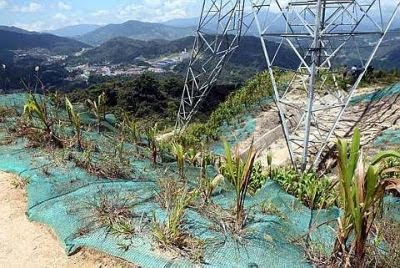
"We collected (signatures for) a petition and submitted it to the Mentri Besar. Then everything went quiet. Right after the March 8 general election (in 2008), word went around that part of the reserve had been degazetted and turned into a Malay reserve, and that temporary land titles had been issued to the Desa Anggerik Committee.
"We are shocked that a human settlement is going to be located on such steep slopes. It will endanger the would-be occupants as well as we who live at the fringe of the hill," she said.
An area of 562ha was gazetted in 1933 as the Mentigi Forest Reserve but a total of 203ha were already excised over the years, with the largest plot being 192ha in 1996.
She said Gunung Jasar is prone to erosion, as evident from the occurrence of several landslides along the TNB pylon; the area was destablished when the transmitter structures were erected. Chong expressed concern that future phases of the housing project will creep into steeper terrains.
She insisted that the petition was not against the creation of a Malay village but was an appeal for the project to be relocated to a safer place.
According to the Local Plan, the project site falls into Class 3 (above 26° gradient) and Class 4 (above 35° gradient) slopes which are environmentally sensitive areas that should not have any form of physical development.
Nevertheless, the project claimed that it had obtained a "work permit" from the Land and District Office, as declared on its signboard.
District officer Datuk Mohamad Noor Abdul Rani, however, refused to be interviewed. He conveyed a message of "no comments" through his personal assistant.
When contacted, Desa Anggerik Committee chairman Usop Yong also declined comment.

"The matter is with the state government. No comments," he said.
Meanwhile, the contractor for the project – Alam Rimba Sdn Bhd – when approached in Tanah Rata in June last year confirmed that a stop-work order was issued in the early days of the project but said the directive came from Kuantan, the state administrative centre.
"The state government instructed that all hill slope projects be stopped temporarily. The rest of it, I don't know. I'm just the contractor," said its director Capt (Rtd) Azman Ahmad.
However, he claimed that the title for the land was approved 15 years ago.
"We discussed with the Land and District Office and the State Govern-ment the shortage of land for the growing population of Malays in Cameron Highlands. Those given the lots are Malays who live in the town, like civil servants, business operators and pensioners. They are low-income earners."
When asked about safety measures, he explained that the cutting of the slope will be limited to a built-up area of around 278sqm in a lot measuring 501sqm to 929sqm.
The building plan obtained indicated that there would be 80 lots on the 13ha site. Overlaying the plan on the Local Plan clearly showed the type of terrain the development will be located on (see graphic).
He said the building plan was drawn up by the Town and Country Planning Department and submitted to the Land and District Office for approval.
He later turned hostile and questioned this reporter's intention. "Is this going to be a positive or negative story? Are you trying to jeopardise a project for the Malays?"
Last July, residents brought their concerns to the attention of the Public Complaints Bureau (PCB).
Following its inspection of the site on Sept 20 by two of its officers, accompanied by a land and district senior officer, state PCB director Azlan Shah Abdul Latif informed Chong (the complainant) that the case was closed as there was no evidence of earthwork that contravened the stop-work order and that the Malaysian Anti-Corruption Commission is investigating the case which it has listed as case No.48793.
The state Malaysian Anti-Corrup-tion Commission has not found any element of corruption in the development of the project in Kampung Tersusun Melayu Angerik.
Pahang MACC Director Datuk Sutinah Sutan said the commission had received complaints and reports from the public alleging corrupt practises.
"We investigated each and every allegation and found that the problem was more towards administrative than corrruption.
"Nonetheless we will continue to keep an eye on the project to ensure there is no hanky panky involved,'' she told The Star.
She appealed to the public to contact or provide the MACC with information if they knew of any corrupt practises that took place either involving the project or any other deals. -- StarProbe.
Water supply affected by overdevelopment
11/1/2010
IT may be the coolest place in Pahang but Cameron Highlands is a water-stressed district in the state.
A resident of Carnation Park, Vasu Karupiah, said that overdevelopment has affected the water catchment areas in the highlands and that illegal vegetable farms are placing tremendous strain on the water supply. The situation is further compounded by the influx of tourists during the holiday seasons.
"During peak season, the flow is controlled, and this housing estate is at the end of the supply line, so we often end up without any water," he lamented.
As Carnation Park, a mixed housing estate comprising four-storey apartments, link-houses, low- to medium-cost flats and bungalows – and 570 households – is close to the Mentigi Forest Reserve which has clear running streams, residents have resorted to siphoning the water off the hills.
They claimed that they had no choice as they could not cope with the frequent water disruptions. A check in the hills showed rubber pipes lining the paths, transferring mountain stream water into huge rubber water containers which are then directed to individual homes.
Other residents said it was a shame that the water supply is getting contaminated as more water catchment areas are contaminated due to soil erosion and the leeching of agro-chemicals from indiscriminate land-clearing and farming practices.
Tung Wan Fee, who used to picnic atop Gunung Jasar, said the highest pylon is perched precariously on the ridge. He expressed concern that any further disturbance could destabilise the slope and cause the pylon to collapse.
Many Kandasamy, a resident of Block B of the SEDC flats located on a hillock, said he learnt that the controversial Kampung Anggerik development project will stretch from Carnation Park to the slopes surrounding the flats.
"We have a water tower here that might collapse if the slope is disturbed. We've not been told what exactly the project entails. How can a housing project on these slopes be approved?" he said, gesturing towards the slopes that are presently covered in thick vegetation. -- StarProbe.
Hillside Hazard
11-January-2010
By Hillary Chiew
CAMERON HIGHLANDS: This famous hill resort is no stranger to bad press, environmentally speaking.
From landslides to rising temperatures, from illegal land use to river contamination, the famous hill station is threatened by overdevelopment.
With the scarcity of flat land, development projects have inevitably encroached into forbidden zones. The latest involves a settlement scheme on a hilly terrain within Mentigi Forest Reserve and Gunung Jasar.
Last May 4, bulldozers cut a 500m trail into the forest reserve, uprooting the old growth and silting creeks that feed into Sungai Tela, a major water source of Cameron Highlands.
A signboard declared that the clearing is for phase one of Kampung Tersusun (Melayu) Anggerik undertaken by the chairman of the Desa Anggerik Development Committee. There is no mention of the architect, geotechnical engineer and developer.
But the earthwork stopped abruptly four days later. Sources said a stop-work order was issued by the District Office, signed by its Chief Assistant District Officer Mohd Isa Awang Chik, purportedly following complaints from the Drainage and Irrigation Department over the absence of silt prevention measures during the construction of the access road.
For the last eight months, residents of Carnation Park and their neighbours in Lembah Jasar, who live next to the project and had opposed it, have been left in the dark over the fate of the project. The residents numbering approximately 2,800, are wary that the project might be allowed to resume later.
A resident, who only wanted to be identified as Mrs Chong, said the residents first heard about plans to develop the forest reserve in 2005.

High tension: The TNB pylon on the ridge of Gunung Jasar, Cameron Highlands has caused landslides on the steep terrain.
"We collected (signatures for) a petition and submitted it to the Mentri Besar. Then everything went quiet. Right after the March 8 general election (in 2008), word went around that part of the reserve had been degazetted and turned into a Malay reserve, and that temporary land titles had been issued to the Desa Anggerik Committee.
"We are shocked that a human settlement is going to be located on such steep slopes. It will endanger the would-be occupants as well as we who live at the fringe of the hill," she said.
An area of 562ha was gazetted in 1933 as the Mentigi Forest Reserve but a total of 203ha were already excised over the years, with the largest plot being 192ha in 1996.
She said Gunung Jasar is prone to erosion, as evident from the occurrence of several landslides along the TNB pylon; the area was destablished when the transmitter structures were erected. Chong expressed concern that future phases of the housing project will creep into steeper terrains.
She insisted that the petition was not against the creation of a Malay village but was an appeal for the project to be relocated to a safer place.
According to the Local Plan, the project site falls into Class 3 (above 26° gradient) and Class 4 (above 35° gradient) slopes which are environmentally sensitive areas that should not have any form of physical development.
Nevertheless, the project claimed that it had obtained a "work permit" from the Land and District Office, as declared on its signboard.
District officer Datuk Mohamad Noor Abdul Rani, however, refused to be interviewed. He conveyed a message of "no comments" through his personal assistant.
When contacted, Desa Anggerik Committee chairman Usop Yong also declined comment.

Who's responsible? The signboard announcing the Phase One development of Kampung Tersusun (Melayu) Anggerik next to the road leading into Carnation Park. It does not state who the architect, geotechnical engineer or developer are.
"The matter is with the state government. No comments," he said.
Meanwhile, the contractor for the project – Alam Rimba Sdn Bhd – when approached in Tanah Rata in June last year confirmed that a stop-work order was issued in the early days of the project but said the directive came from Kuantan, the state administrative centre.
"The state government instructed that all hill slope projects be stopped temporarily. The rest of it, I don't know. I'm just the contractor," said its director Capt (Rtd) Azman Ahmad.
However, he claimed that the title for the land was approved 15 years ago.
"We discussed with the Land and District Office and the State Govern-ment the shortage of land for the growing population of Malays in Cameron Highlands. Those given the lots are Malays who live in the town, like civil servants, business operators and pensioners. They are low-income earners."
When asked about safety measures, he explained that the cutting of the slope will be limited to a built-up area of around 278sqm in a lot measuring 501sqm to 929sqm.
The building plan obtained indicated that there would be 80 lots on the 13ha site. Overlaying the plan on the Local Plan clearly showed the type of terrain the development will be located on (see graphic).
He said the building plan was drawn up by the Town and Country Planning Department and submitted to the Land and District Office for approval.
He later turned hostile and questioned this reporter's intention. "Is this going to be a positive or negative story? Are you trying to jeopardise a project for the Malays?"
Last July, residents brought their concerns to the attention of the Public Complaints Bureau (PCB).
Following its inspection of the site on Sept 20 by two of its officers, accompanied by a land and district senior officer, state PCB director Azlan Shah Abdul Latif informed Chong (the complainant) that the case was closed as there was no evidence of earthwork that contravened the stop-work order and that the Malaysian Anti-Corruption Commission is investigating the case which it has listed as case No.48793.
The state Malaysian Anti-Corrup-tion Commission has not found any element of corruption in the development of the project in Kampung Tersusun Melayu Angerik.
Pahang MACC Director Datuk Sutinah Sutan said the commission had received complaints and reports from the public alleging corrupt practises.
"We investigated each and every allegation and found that the problem was more towards administrative than corrruption.
"Nonetheless we will continue to keep an eye on the project to ensure there is no hanky panky involved,'' she told The Star.
She appealed to the public to contact or provide the MACC with information if they knew of any corrupt practises that took place either involving the project or any other deals. -- StarProbe.
Water supply affected by overdevelopment
11/1/2010
IT may be the coolest place in Pahang but Cameron Highlands is a water-stressed district in the state.
A resident of Carnation Park, Vasu Karupiah, said that overdevelopment has affected the water catchment areas in the highlands and that illegal vegetable farms are placing tremendous strain on the water supply. The situation is further compounded by the influx of tourists during the holiday seasons.
"During peak season, the flow is controlled, and this housing estate is at the end of the supply line, so we often end up without any water," he lamented.
As Carnation Park, a mixed housing estate comprising four-storey apartments, link-houses, low- to medium-cost flats and bungalows – and 570 households – is close to the Mentigi Forest Reserve which has clear running streams, residents have resorted to siphoning the water off the hills.
They claimed that they had no choice as they could not cope with the frequent water disruptions. A check in the hills showed rubber pipes lining the paths, transferring mountain stream water into huge rubber water containers which are then directed to individual homes.
Other residents said it was a shame that the water supply is getting contaminated as more water catchment areas are contaminated due to soil erosion and the leeching of agro-chemicals from indiscriminate land-clearing and farming practices.
Tung Wan Fee, who used to picnic atop Gunung Jasar, said the highest pylon is perched precariously on the ridge. He expressed concern that any further disturbance could destabilise the slope and cause the pylon to collapse.
Many Kandasamy, a resident of Block B of the SEDC flats located on a hillock, said he learnt that the controversial Kampung Anggerik development project will stretch from Carnation Park to the slopes surrounding the flats.
"We have a water tower here that might collapse if the slope is disturbed. We've not been told what exactly the project entails. How can a housing project on these slopes be approved?" he said, gesturing towards the slopes that are presently covered in thick vegetation. -- StarProbe.
Sunday, January 10, 2010
Restoran Zainab Sam

FOR good Malay food in the Cameron Highlands, make your way to this outlet. Zainab Sam Abdul Latif started a stall in 1974 and over the years, it expanded into this small restaurant.
At 66, Zainab, who hails from Batu Gajah, Perak, still actively attends to her customers, who declare that she serves the best Malay and Thai-style cuisine in the area.
The restaurant serves fried rice in many styles, such as nasi goreng kampung and nasi goreng Pattaya. Prices start from RM3, depending on the cooking style and the ingredients. If you opt for plain rice, Zainab offers about 20 types of vegetable, meat and fish dishes daily.
There is also good sup tulang or beef bone soup to be found here. What is outstanding is the ikan keli masak sambal. Zainab's nasi lemak with its flavourful rice is also good. - Star Street Food Guide.
Restoran Zainab Sam
(Opposite HSBC Bank)
10 Main Road, Tanah Rata.
Tel: 05-491 1917
Open 6.30am to 10pm.
Days off not fixed.
(That's why it is difficult to try it. So many times I look for this stall and still no luck trying it! Cheers!)
Friday, January 08, 2010
Cameron Highlands Indian farmers facing eviction
Cameron Highlands Indian farmers facing eviction
8/1/2010
Makkal Osai front-paged the plight of 600 Indian families, who have been involved in agriculture for the past 50 years in Cameron Highlands, who are now facing eviction.
Cameron Highlands Indian Farmers Association president P. Viswanathan said that most of the farmers were on temporary occupancy licence (TOL) land.
He said the Government had received reports that their agricultural waste products were being emptied into the rivers resulting in drinking water being contaminated.
They were issued eviction notices by the Land Office.
Viswanathan said the Land Office had said that although the TOL licences were valid until 2015, the Government could take back the land for development if the need arose.
He said many of the farmers had taken agricultural loans.
He added that the Land Office should at least allocate alternative plots of land to those who had been involved in farming for more than 40 years.
Previously, the Government had given alternative land to TOL landowners whose agricultural land was taken up for a road widening project.
He said the Government should consider that most of the affected farmers depended solely on the income from their agricultural business ventures. - Makkal Osai
8/1/2010
Makkal Osai front-paged the plight of 600 Indian families, who have been involved in agriculture for the past 50 years in Cameron Highlands, who are now facing eviction.
Cameron Highlands Indian Farmers Association president P. Viswanathan said that most of the farmers were on temporary occupancy licence (TOL) land.
He said the Government had received reports that their agricultural waste products were being emptied into the rivers resulting in drinking water being contaminated.
They were issued eviction notices by the Land Office.
Viswanathan said the Land Office had said that although the TOL licences were valid until 2015, the Government could take back the land for development if the need arose.
He said many of the farmers had taken agricultural loans.
He added that the Land Office should at least allocate alternative plots of land to those who had been involved in farming for more than 40 years.
Previously, the Government had given alternative land to TOL landowners whose agricultural land was taken up for a road widening project.
He said the Government should consider that most of the affected farmers depended solely on the income from their agricultural business ventures. - Makkal Osai
Thursday, December 24, 2009
Cameron Highlands Farming Issues
Farms encroaching on reserved land taken down
By Ivan Loh
23/Dec/2009
CAMERON HIGHLANDS: Enforcement officers demolished the sheds covering four vegetable farms built in the buffer zone of reserved land near Sungai Terla.
It was not a smooth operation with the farmers screaming and crying aloud as Rela personnel held them aside. Reporters who had gathered there were also yelled at.
The distraught farmers even tore down a bridge across the river to prevent the enforcement personnel from getting to the farms.
District Officer Datuk Mohamad Noor Abdul Rani said action was taken as the plots were too near the riverside, with pesticides and fertilisers seeping into the river.
He said plastic bags and pesticide containers were also dumped near the river.
Mohamad Noor said the ruling was that farms should be at least 10m away from rivers.
"The river is the intake point to a reservoir in Cameron Highlands. Tests conducted on the water quality by the Health Department recently showed that it was unsatisfactory," he told a press conference after the demolition work.
He assured that the water could still be treated and would be safe for consumption, adding that another seven farms there would be monitored by the Pahang Drainage and Irrigation Department until new directives to clear the farms were given.
Mohamad Noor said all 11 farmers have had their Temporary Occupancy Licences revoked for encroaching into the reserved land.
He said the issue only came to their attention following a TV programme that highlighted the pollution caused by the farmers.
"The farmers already know that they will not get any compensation because they have encroached onto reserved land. But they can still appeal to the Pahang government for land to continue farming," he added.
Tanah Rata assemblyman Ho Yip Kap pledged to raise the matter with state officials to help the affected farmers. -- The Star
Chaos as vegetable farms near river are demolished
By Ivan Loh
24/Dec/2009
CAMERON HIGHLANDS: Enforcement officers demolished sheds covering four vegetable plots in the buffer zone of a reserve land near Sungai Terla.
It was not a smooth operation, however. The farmers were screaming and crying aloud as Rela personnel held them down. Reporters who had gathered there were also yelled at.
The farmers even tried to tear down a bridge across the river to prevent the enforcement personnel from getting to the farms.
District Officer Datuk Mohamad Noor Abdul Rani said action was taken as the plots were too near the riverside, with pesticides and fertiliser seeping into the river.

He said plastic bags and pesticide containers were also dumped near the river.
Mohamad Noor said the ruling was that farms should be at least 10m away from rivers. "The river is the intake point to a reservoir in Cameron Highlands. Tests conducted on the water quality by the Health Department recently showed that it was unsatisfactory," he told a press conference after the demolition work.
He gave an assurance that the water could still be treated and would be safe for consumption.
Mohamad Noor said all 11 farmers have had their Temporary Occupancy Licences revoked due to the encroachment into the reserve land.
He said the issue only came to their attention after a TV programme that highlighted the pollution caused by the farmers.
"The farmers already know that they will not get any compensation because they have encroached onto reserve land. But they can still appeal to the Pahang government for land to continue farming," he added.
Tanah Rata assemblyman Ho Yip Kap pledged to raise the matter with state officials to help the affected farmers. -- The Star
By Ivan Loh
23/Dec/2009
CAMERON HIGHLANDS: Enforcement officers demolished the sheds covering four vegetable farms built in the buffer zone of reserved land near Sungai Terla.
It was not a smooth operation with the farmers screaming and crying aloud as Rela personnel held them aside. Reporters who had gathered there were also yelled at.
The distraught farmers even tore down a bridge across the river to prevent the enforcement personnel from getting to the farms.
District Officer Datuk Mohamad Noor Abdul Rani said action was taken as the plots were too near the riverside, with pesticides and fertilisers seeping into the river.
He said plastic bags and pesticide containers were also dumped near the river.
Mohamad Noor said the ruling was that farms should be at least 10m away from rivers.
"The river is the intake point to a reservoir in Cameron Highlands. Tests conducted on the water quality by the Health Department recently showed that it was unsatisfactory," he told a press conference after the demolition work.
He assured that the water could still be treated and would be safe for consumption, adding that another seven farms there would be monitored by the Pahang Drainage and Irrigation Department until new directives to clear the farms were given.
Mohamad Noor said all 11 farmers have had their Temporary Occupancy Licences revoked for encroaching into the reserved land.
He said the issue only came to their attention following a TV programme that highlighted the pollution caused by the farmers.
"The farmers already know that they will not get any compensation because they have encroached onto reserved land. But they can still appeal to the Pahang government for land to continue farming," he added.
Tanah Rata assemblyman Ho Yip Kap pledged to raise the matter with state officials to help the affected farmers. -- The Star
Chaos as vegetable farms near river are demolished
By Ivan Loh
24/Dec/2009
CAMERON HIGHLANDS: Enforcement officers demolished sheds covering four vegetable plots in the buffer zone of a reserve land near Sungai Terla.
It was not a smooth operation, however. The farmers were screaming and crying aloud as Rela personnel held them down. Reporters who had gathered there were also yelled at.
The farmers even tried to tear down a bridge across the river to prevent the enforcement personnel from getting to the farms.
District Officer Datuk Mohamad Noor Abdul Rani said action was taken as the plots were too near the riverside, with pesticides and fertiliser seeping into the river.

Total disarray: A woman crying as Rela members restrain her husband after they were overcome by emotion when their farm in Kuala Terla was demolished by Cameron Highlands district office enforcement officers yesterday. – Saiful Bahri / The Star
He said plastic bags and pesticide containers were also dumped near the river.
Mohamad Noor said the ruling was that farms should be at least 10m away from rivers. "The river is the intake point to a reservoir in Cameron Highlands. Tests conducted on the water quality by the Health Department recently showed that it was unsatisfactory," he told a press conference after the demolition work.
He gave an assurance that the water could still be treated and would be safe for consumption.
Mohamad Noor said all 11 farmers have had their Temporary Occupancy Licences revoked due to the encroachment into the reserve land.
He said the issue only came to their attention after a TV programme that highlighted the pollution caused by the farmers.
"The farmers already know that they will not get any compensation because they have encroached onto reserve land. But they can still appeal to the Pahang government for land to continue farming," he added.
Tanah Rata assemblyman Ho Yip Kap pledged to raise the matter with state officials to help the affected farmers. -- The Star
Wednesday, December 16, 2009
Cameron Highlands Tapah route to be widen
It's about time they widen the Tapah route to Cameron Highlands. It is really narrow and winding and it is shorter distance if coming from the south like from Kuala Lumpur, Malacca, Johor or Singapore. Sometimes those buses use up both lanes when they turn a corner and it is very difficult to overtake them!
Road to Cameron Highlands to be widened
11/Dec/2009 -- The Star
IPOH: The 45km stretch of road from Tapah to Cameron Highlands will be widened to allow for smoother traffic flow.
Perak state executive council member Datuk Dr Mah Hang Soon said the Public Works Department would submit a proposal on the matter to the Government under the 10th Malaysia Plan.
"The present road is too narrow for the increasing number of vehicles using that stretch, especially lorries ferrying vegetables from Cameron Highlands," he said Friday.
Speaking to reporters after visiting his Chenderiang constituency in Tapah, 60km from here, Dr Mah said with the wider road, motorists could have an alternative to the Simpang Pulai-Cameron Highlands route.
To complement the widening of stretch, Dr Mah said the turning after the Tapah toll exit would also be widened.
"Several nasty accidents have occurred at that stretch before and the department has suggested that measures be put in place," he said. -- The Star News.
Paving way to wider road
By Sylvia Looi 16/Dec/2009
THERE are plans to widen the 45km stretch of road from Tapah to Cameron Highlands for a smoother traffic flow.
Perak executive council member Datuk Dr Mah Hang Soon said the state Public Works Department (PWD) would submit a proposal on the matter to the Federal Government for the 10th Malaysia Plan.

"The present road is too narrow for the increasing number of vehicles using it, especially lorries ferrying vegetables from Cameron Highlands," he told reporters on Friday after visiting his Chenderiang constituency in Tapah, 60km from here.
Dr Mah said that with the wider road, motorists could have an alternative to the Simpang Pulai-Cameron Highlands route.
To complement the widening, Dr Mah said the turning after the Tapah toll exit would also be ex-panded.
"Several nasty accidents have occurred at that stretch before and PWD has suggested that measures be put in place," he said.
On another matter, Dr Mah said the perennial flash flood problem affecting 1,000 villagers along Jalan Pahang in Tapah would be a thing of the past when the JKR deepened and widened the drains.
"A 1.2m wide box culvert will also be put in place along Sungai Cheroh to ensure better flow of water when it rains," he said.
He added that the project was expected to cost RM300,000.
He added that villagers had been putting up with flash floods for years due to shallow drains. -- The Star News.
Road to Cameron Highlands to be widened
11/Dec/2009 -- The Star
IPOH: The 45km stretch of road from Tapah to Cameron Highlands will be widened to allow for smoother traffic flow.
Perak state executive council member Datuk Dr Mah Hang Soon said the Public Works Department would submit a proposal on the matter to the Government under the 10th Malaysia Plan.
"The present road is too narrow for the increasing number of vehicles using that stretch, especially lorries ferrying vegetables from Cameron Highlands," he said Friday.
Speaking to reporters after visiting his Chenderiang constituency in Tapah, 60km from here, Dr Mah said with the wider road, motorists could have an alternative to the Simpang Pulai-Cameron Highlands route.
To complement the widening of stretch, Dr Mah said the turning after the Tapah toll exit would also be widened.
"Several nasty accidents have occurred at that stretch before and the department has suggested that measures be put in place," he said. -- The Star News.
Paving way to wider road
By Sylvia Looi 16/Dec/2009
THERE are plans to widen the 45km stretch of road from Tapah to Cameron Highlands for a smoother traffic flow.
Perak executive council member Datuk Dr Mah Hang Soon said the state Public Works Department (PWD) would submit a proposal on the matter to the Federal Government for the 10th Malaysia Plan.

Site of many accidents: Dr Mah (left) inspecting Jalan Chenderiang with PWD officials including Dr Safry (third left).
"The present road is too narrow for the increasing number of vehicles using it, especially lorries ferrying vegetables from Cameron Highlands," he told reporters on Friday after visiting his Chenderiang constituency in Tapah, 60km from here.
Dr Mah said that with the wider road, motorists could have an alternative to the Simpang Pulai-Cameron Highlands route.
To complement the widening, Dr Mah said the turning after the Tapah toll exit would also be ex-panded.
"Several nasty accidents have occurred at that stretch before and PWD has suggested that measures be put in place," he said.
On another matter, Dr Mah said the perennial flash flood problem affecting 1,000 villagers along Jalan Pahang in Tapah would be a thing of the past when the JKR deepened and widened the drains.
"A 1.2m wide box culvert will also be put in place along Sungai Cheroh to ensure better flow of water when it rains," he said.
He added that the project was expected to cost RM300,000.
He added that villagers had been putting up with flash floods for years due to shallow drains. -- The Star News.
Saturday, November 28, 2009
Gunung Beremban Cameron Highlands climbed by visually-impaired kids
Visually-impaired kids climb hill
28/Nov/2009
THE VISUALLY-impaired pupils and teachers celebrated with great joy when everyone in their group successfully climbed Gunung Berembun, Cameron Highlands, during their three-day camping trip.
It was one of the outdoor activities organised under Sekolah Kebangsaan Klang's Special Education Integration Programme for the Visually Impaired.
The school is the main school for pupils who have visual impairment to follow the complete schooling system for blind students in Selangor.
Visual impairment is categorised into two — direct blindness and limited eyesight.
The Special Education Conquering Gunung Berembun Programme offered an opportunity for the school's 18 visually-impaired pupils to gain experience and widen their knowledge through activities outside the classroom.

Shania Choo Lee Vien, 10, said the camp marked her second to Cameron Highlands.
"We went to the same place last year but only managed to go halfway up the hill," she said.
"My teachers prepared us a few months before this year's trip by getting us to do half-hour walks at the stadium or school stairs to build our strength every morning."
The Year Four pupil recalled falling many times due to the slippery ground, but her teachers helped her back on her feet.
"I enjoyed shopping and visiting the strawberry farms in Cameron Highlands," said Choo.
"I liked the beautiful flowers I saw during climb. Sleeping in the tent was fun too. Bathing was terrible though — the water was like ice!"
Choo's mother, Lee Nyok Chun, said she was initially concerned that it would be challenging for her daughter to climb and camp in such a cold place.
"But I allowed her to go because I wanted her to experience what a normal child would have experienced and to be independent," said the 47-year-old who is also a teacher.
"It is normal for parents to worry about their child's safety but I knew she would be in good hands.
"She has dedicated teachers who are willing to take the time and trouble to expose them to nature and the life that a normal child has," said Lee.
Suzana Aziz and Ahmad Fakarudin Abdul Wahab were among the teachers who went on the trip to the 1,840m-high mountain.
On the preparations they needed to make, Suzana, 33, said: "It was very important to take note of the pupils' own capability levels as well as physical and mental endurance.
"Many elements, like the pupils' physical endurance training, financial resources, work force and teachers' preparation had to be carefully planned before carrying out the programme."
Ahmad Fakarudin, 29, said they faced many difficulties in organising the trip, including getting sponsors, getting parents to trust the teachers to care for their children, building the pupils' endurance to be able face challenges during the climb and sacrificing time to train for the trip.
"The completely blind pupils were the ones who needed the most assistance during the climb," said Suzana, who teaches Science and Orientation & Mobility.
"The teachers had to help carry some pupils during the descent. But we were all committed to realising the pupils' dream of conquering the mountain."
Both teachers said the sweetest moment was when all the pupils managed to successfully reach the mountain's peak without any injury, even though at times they had to resort to crawling due to exhaustion.
"We must treat the children as human beings, and not think of them as the disabled," said Ahmad Fakarudin, a Bahasa Malaysia and Physical Education teacher. -- The Star News.
28/Nov/2009
THE VISUALLY-impaired pupils and teachers celebrated with great joy when everyone in their group successfully climbed Gunung Berembun, Cameron Highlands, during their three-day camping trip.
It was one of the outdoor activities organised under Sekolah Kebangsaan Klang's Special Education Integration Programme for the Visually Impaired.
The school is the main school for pupils who have visual impairment to follow the complete schooling system for blind students in Selangor.
Visual impairment is categorised into two — direct blindness and limited eyesight.
The Special Education Conquering Gunung Berembun Programme offered an opportunity for the school's 18 visually-impaired pupils to gain experience and widen their knowledge through activities outside the classroom.

Determined lot: The visually-impaired pupils and their teachers who successfully climbed Gunung Berembun, Cameron Highlands.
Shania Choo Lee Vien, 10, said the camp marked her second to Cameron Highlands.
"We went to the same place last year but only managed to go halfway up the hill," she said.
"My teachers prepared us a few months before this year's trip by getting us to do half-hour walks at the stadium or school stairs to build our strength every morning."
The Year Four pupil recalled falling many times due to the slippery ground, but her teachers helped her back on her feet.
"I enjoyed shopping and visiting the strawberry farms in Cameron Highlands," said Choo.
"I liked the beautiful flowers I saw during climb. Sleeping in the tent was fun too. Bathing was terrible though — the water was like ice!"
Choo's mother, Lee Nyok Chun, said she was initially concerned that it would be challenging for her daughter to climb and camp in such a cold place.
"But I allowed her to go because I wanted her to experience what a normal child would have experienced and to be independent," said the 47-year-old who is also a teacher.
"It is normal for parents to worry about their child's safety but I knew she would be in good hands.
"She has dedicated teachers who are willing to take the time and trouble to expose them to nature and the life that a normal child has," said Lee.
Suzana Aziz and Ahmad Fakarudin Abdul Wahab were among the teachers who went on the trip to the 1,840m-high mountain.
On the preparations they needed to make, Suzana, 33, said: "It was very important to take note of the pupils' own capability levels as well as physical and mental endurance.
"Many elements, like the pupils' physical endurance training, financial resources, work force and teachers' preparation had to be carefully planned before carrying out the programme."
Ahmad Fakarudin, 29, said they faced many difficulties in organising the trip, including getting sponsors, getting parents to trust the teachers to care for their children, building the pupils' endurance to be able face challenges during the climb and sacrificing time to train for the trip.
"The completely blind pupils were the ones who needed the most assistance during the climb," said Suzana, who teaches Science and Orientation & Mobility.
"The teachers had to help carry some pupils during the descent. But we were all committed to realising the pupils' dream of conquering the mountain."
Both teachers said the sweetest moment was when all the pupils managed to successfully reach the mountain's peak without any injury, even though at times they had to resort to crawling due to exhaustion.
"We must treat the children as human beings, and not think of them as the disabled," said Ahmad Fakarudin, a Bahasa Malaysia and Physical Education teacher. -- The Star News.
Friday, November 27, 2009
Singing star from Cameron Highlands
Singing star from Cameron Highlands
By Chan Le Leen
27/Nov/2009
Cameron Highlands girl Chen Keat Yoke has brought further recognition to her idyllic hometown in Pahang by winning the TVB8 International Chinese New Talent Singing Championship 2009 in Hong Kong.
"Cameron Highlands is known for its vegetables, flowers and tea. People used to know me as vegetable wholesaler Ah Kong's daughter but these days, they actually know me by my name," Keat Yoke said of her newfound fame.
She described her win as most unexpected.
She beat 15 other finalists from various north American, Australian, European and Asian cities to bag the Golden Mike Award and the subsidiary title of Perfect Vocalist.
She was previously second runner-up in the Astro Star Quest 2009.

The TVB8 International Chinese New Talent Singing Championship is a prestigious Hong Kong-based singing competition that has spun out big names like Anita Mui (1982) Alex To (1985) and Eason Chan (1995).
Former contestants who went on to carve successful singing careers include William So, Hacken Lee, Leon Lai, Sammi Cheng and Coco Lee.
"From the beginning, people expressed on blogs and Internet portals that I was undeserving of a Top Five spot in the Astro Star Quest 2009. As a representative of Malaysia in Hong Kong, I was considered an underdog who was lucky to be there by virtue of winning the second runner-up spot," she said.
But the 20-year-old songbird, who prefers singing slow ballads, was unperturbed by such sentiments about her.
"I was not bothered. I joined for fun and it was a bonus to be able to compete in Hong Kong," she said.

Keat Yoke, who has since recorded a Chinese New Year album with her fellow Astro artistes, did however admit that it was only after her win in the Astro Star Quest 2009 that made her believe she could make a career out of singing.
Keat Yoke is now concentrating on her job commitments with Astro including an acting stint as Ah Lian, the salted fish seller girlfriend to MyFM deejay Jack Lim in the upcoming movie ‘Woohoo!'.
"I'm not sure what happens next. Of course, I'll be glad to accept offers from recording companies but I still wish to pursue a degree in bioinformatics," said Keat Yoke, who due o her love of singing, has ut her studies on hold for awhile. -- The Star News.
By Chan Le Leen
27/Nov/2009
Cameron Highlands girl Chen Keat Yoke has brought further recognition to her idyllic hometown in Pahang by winning the TVB8 International Chinese New Talent Singing Championship 2009 in Hong Kong.
"Cameron Highlands is known for its vegetables, flowers and tea. People used to know me as vegetable wholesaler Ah Kong's daughter but these days, they actually know me by my name," Keat Yoke said of her newfound fame.
She described her win as most unexpected.
She beat 15 other finalists from various north American, Australian, European and Asian cities to bag the Golden Mike Award and the subsidiary title of Perfect Vocalist.
She was previously second runner-up in the Astro Star Quest 2009.

Animated: Chen belting out a song during the contest.
The TVB8 International Chinese New Talent Singing Championship is a prestigious Hong Kong-based singing competition that has spun out big names like Anita Mui (1982) Alex To (1985) and Eason Chan (1995).
Former contestants who went on to carve successful singing careers include William So, Hacken Lee, Leon Lai, Sammi Cheng and Coco Lee.
"From the beginning, people expressed on blogs and Internet portals that I was undeserving of a Top Five spot in the Astro Star Quest 2009. As a representative of Malaysia in Hong Kong, I was considered an underdog who was lucky to be there by virtue of winning the second runner-up spot," she said.
But the 20-year-old songbird, who prefers singing slow ballads, was unperturbed by such sentiments about her.
"I was not bothered. I joined for fun and it was a bonus to be able to compete in Hong Kong," she said.

New talent: Chen accepting her trophy as winner of the TVB8 International Chinese New Talent Singing Championship 2009 in Hong Kong.
Keat Yoke, who has since recorded a Chinese New Year album with her fellow Astro artistes, did however admit that it was only after her win in the Astro Star Quest 2009 that made her believe she could make a career out of singing.
Keat Yoke is now concentrating on her job commitments with Astro including an acting stint as Ah Lian, the salted fish seller girlfriend to MyFM deejay Jack Lim in the upcoming movie ‘Woohoo!'.
"I'm not sure what happens next. Of course, I'll be glad to accept offers from recording companies but I still wish to pursue a degree in bioinformatics," said Keat Yoke, who due o her love of singing, has ut her studies on hold for awhile. -- The Star News.
Monday, November 09, 2009
Cameron Highlands Strawberry Farm
Strawberry fields
By Wong Li Za
9 Nov 2009
Tart or sweet, strawberries will be plentiful now that Cameron Highlands has come under the Satu Daerah, Satu Industri programme.
CAMERON Highlands' appeal lies in its tea plant terraces, cool air and fresh produce. Each year, an estimated five million tourists flock to the highlands in Pahang, which is the only area in the country with commercial strawberry farms.
Unfortunately, many people's impression of Cameron Highlands strawberries is that they are "small and sour" – at least those were my childhood memories of the fruit. However, with research and development, bigger and less sour strawberries have since been cultivated. This year, Cameron Highlands and its strawberry industry were listed under the Agriculture and Agro-based Industries Ministry's Satu Daerah, Satu Industri (One District, One Industry) programme.

Recent years have also seen vegetable farmers switching to strawberries due to better demand and stable prices.
Graduating smack in the 1985 recession was a dampener for Lawrence Wong, who obtained an electrical and electronic engineering degree from the Federal Institute of Technology Kuala Lumpur.
The then 21-year-old Wong decided to go home to Cameron Highlands and temporarily help out at his parents' 0.6ha vegetable and flower farm.
Wong never returned to Kuala Lumpur and today, he is an innovative and successful strawberry farmer and entrepreneur at EQ Farm in Brinchang. He switched to planting strawberries in 2003 because of fluctuating vegetable prices and was the first to offer pluck-your-own strawberries activity for tourists in the same year. Visitors can pluck a minimum half kg of strawberries by paying a fee of RM15 to RM20, depending on the season.
"These days, it's difficult to tell when the strong growth season is because the weather is so unpredictable. Last year, there was a period when it rained for four months and that greatly affected our yield," says Wong, 45, adding that strawberries need sunlight and have to be shielded from rainfall.

A new plant bears fruit after three months, after which it has a turnaround period of one month before the next harvest, he adds.
Sweet note
As we walk among the neat rows of two-tiered strawberry plants, Wong lets us sample each of the three main varieties – the Chandler from The Netherlands, the Camarosa from the United States, and Sweet Charlie from Eqypt. Although some of them still tasted sourish, many were indeed sweet.
Recently, Wong also started growing the Akihime variety from Japan which is longish in shape and can grow to a good size. Just 12 pieces weigh about half a kg.
What is unique about this variety is that it has a sweetness level (brix level) of at least 14, according to Wong. (For comparison, the brix level of grapes and oranges can go up to 20.) We lost no time in sampling one. It was sweeter and had a pleasant whiff of vanilla to it as we took a bite.
Two years ago, Wong started using an alkaline material fertiliser imported from Japan. Costing RM7,000 per tonne, the natural fertiliser is made from ash and silicon material.
"With this fertiliser, the strawberries turn out sweeter and bigger. It also tends to restore the plant strength to that of the first harvest," says Wong, adding that the fertiliser raises the brix level of strawberries from an initial seven to nine, to 10 or 11.

Wong uses the drip irrigation system of cultivation and mixes soil with mushroom sawdust and coconut husk or coco peat. He also grows organic oyster mushrooms and pearl corn, a sweet corn variety from Taiwan.
"The mushroom sawdust contains alkaline material in it. Combined with the alkaline fertiliser, any worms in the soil will die off due to the alkaline environment," says Wong, who uses a bio-organism for pest control and fungicide to prevent moulding of the fruit.
Besides taking pride in being pesticide-free, Wong also uses a technology called Sonic Bloom plant music in his farm. The music is piped in to the farm every morning for one hour via strategically-placed speakers. A product from the United States, Sonic Bloom is natural sounds of the forest and is believed to help plants grow healthier, faster and produce higher yields.
Wong sells his strawberries at RM40 a kg, which is higher than some of the other farms but he has no problems with demand due to the quality of the fruits.
Due to limited land, Wong only supplies fresh strawberries to tourists at his centre and to local cake shops in and around Cameron Highlands. Besides fresh strawberries, the farm also produces preservative-free strawberry jams, with no added sugar or less sugar, on-site. Each kg of strawberries makes two to three jars of jam.

Other products include strawberry ice-cream potong (ice-sticks), fresh strawberry juice, strawberry enzyme, strawberry salad, and desserts.
In future, Wong hopes to implement Japanese techniques of organic farming and obtain more Japanese varieties. "The importance is in the technique of growing the strawberries. My aim is to achieve the Japanese standard of growth."
Local attraction
Strawberry grower Selvaraj Veerappan will be the first to admit that tending a strawberry farm is hard work.
The price of fertilisers has doubled, yield is affected by the weather and leaves need to be pruned constantly to ensure healthy fruits.
"It's not easy to grow strawberries. It's a lot of hard work to maintain the farm and the plants," says Selvaraj, 51, owner of Raju Hills Strawberry Farm in Brinchang.
He employs nine workers at his farm, which has been around since 1945. The 1.2ha plot was initially tended by Selvaraj's father, who grew vegetables.
In 1995, Selvaraj, who leased the land from the state government, switched to growing strawberries.
"Demand is tourist-driven and not dependent on wholesaler prices, which can be unstable and low," he says. "Besides, not everybody can afford to go overseas to visit strawberries so our farm is something special for locals."
Selvaraj grows the Festival variety of strawberries from The Netherlands. He admits that the variety is a little sour but sturdier. "Even those in The Netherlands are sour too," he says, adding that strawberries thrive in temperatures of between 15° and 25°C.
The main harvest period is in September but Selvaraj says there are not many tourists during that time. On the other hand, the year-end school holiday period is usually the rainy season, which affects yield.
During harvest season, the farm produces between 50kg and 100kg a day, for up to 25 days. After each harvest, the following two months will only see a yield of 10kg to 15kg a day. Annually, the farm produces about three tonnes of strawberries which are sold at around RM25 per kg.
Each plant lasts about three years, with the first year giving the highest yield.
Selvaraj uses the drip irrigation system and coconut husks to grow the strawberries. He also applies chemical fertilisers and pesticides. According to Selvaraj, the plants need six sets of fertilisers a month, each set costing RM650.
"The price of fertilisers doubled five years ago. However, growing the plants above ground reduces the need for pesticides by up to 80% and is also easier on the workers when harvesting the fruits," he says.
Besides fresh fruits, Selvaraj also produces strawberry jam, strawberry marmalade, ice-cream, milkshake, cakes and jam tarts. All the fresh strawberries and strawberry products are only sold at the farm.
Selvaraj is not too keen on letting visitors pluck their own strawberries because he says children tend to damage the plants.
"If you do not pluck the fruit but just happen to touch it lightly, it will grow fungus the next day. We must be careful to pluck it off by the stalk," says Selvaraj, who only keeps three rows of plants open for tourists.
Higher yield
According to the Agriculture Department's 2008 records, Cameron Highlands produces RM60mil to RM70mil worth of fresh strawberries a year. (However, there are farmers who claim this figure is over-estimated.)
There are 52 strawberry growers in Cameron Highlands with a combined area of growth spanning 30ha. The department also estimates that the farmers produce RM12mil to RM18mil worth of strawberry-based products a year.
The Agriculture and Agro-based Industries Ministry first introduced the Satu Daerah, Satu Industri programme in 2002. The aim of SDSI is to boost the commercial development of products and services unique to a district to attract tourists to the area.
This year, Cameron Highlands is one of the areas to come under the SDSI project under the purview of the Agriculture Department. The other areas are Sepang in Selangor, for tapioca, and Hilir Perak for coconut. The programme's objectives include making Cameron Highlands the main producer and exporter of strawberries in the country; increasing the quality of strawberries and strawberry-based products; increasing the average income of growers; and making the strawberry industry the main agro-tourism product in Cameron Highlands.
One of the participating farms under the programme is KHM Farm located in Tanah Rata. The 10-year-old farm works closely with the Malaysian Agricultural Research and Development Institute (Mardi). KHM rents a 2.4ha farm area, spread out over several locations, from Mardi. The farm also has free access to Mardi's food processing facilities and receives marketing support via the Federal Agricultural Marketing Authority (Fama).
It produces six strawberry-based products – jam (its bestseller), ice-cream, acar (pickle), cordial, chutney and dried strawberries.
KHM holds joint research work with Mardi and one of the projects involved the implementation of the cold chain system four years ago. The system helps prolong the freshness of the strawberries.
"After plucking the strawberries by breaking at the stalk without touching the fruit, they are sent to a chiller initially set at 3°C for 24 hours," says Khairani Mohd, owner of KHM. adding that the temperature is gradually brought up to 7°C.
The strawberries are then transported by road at a temperature of 15°C and once they reach the supermarkets, kept at 8°C to keep the fruits fresh for two weeks, or at 6°C to keep them for four weeks.
The strawberry varieties at KHM are Camarosa, Chandler, Elsanta, Diamante, Aromas and Festival. The brix level of these strawberries is eight to nine, which is still a little sour.
"In Holland (The Netherlands), most of the strawberries have a brix level of only six because of lack of sunlight. Therefore, Malaysia is in a good position to produce strawberries." says Khairani, 52.
Thrips and mites pose the main threats to the strawberry plants, says Khairani, and the farm uses pesticide and predator mites to counter the problem. Khairani also uses a chemical fertiliser called fertigation fertiliser, made up of coconut husks and perlite.
"The main factors for healthy strawberries are good pest management and limited use of chemicals. It is also important to have traceability of the fruits for safety purposes."
According to Khairani, a 10,000-plant farm can generate income of between RM5,000 and RM8,000 a month. He adds that there are nine big players in Cameron Highlands, each covering land areas of 0.8ha and above. One acre (0.4ha) accommodates about 100,000 plants.
Generally, there are three major harvests a year. However, Khairani says KHM has managed to implement a system that induces the fruits to produce off season, culminating in up to seven harvests a year. "We create artificial winter conditions and introduce hormones to induce growth," he says.
On average, KHM Farm's daily output is 200kg, which are sold for between RM20 and RM25 per kg. About 70% of the fresh strawberries are sold to hypermarkets and supermarkets in Malaysia, while the rest are for tourists in Cameron Highlands. -- The Star Lifestyle
By Wong Li Za
9 Nov 2009
Tart or sweet, strawberries will be plentiful now that Cameron Highlands has come under the Satu Daerah, Satu Industri programme.
CAMERON Highlands' appeal lies in its tea plant terraces, cool air and fresh produce. Each year, an estimated five million tourists flock to the highlands in Pahang, which is the only area in the country with commercial strawberry farms.
Unfortunately, many people's impression of Cameron Highlands strawberries is that they are "small and sour" – at least those were my childhood memories of the fruit. However, with research and development, bigger and less sour strawberries have since been cultivated. This year, Cameron Highlands and its strawberry industry were listed under the Agriculture and Agro-based Industries Ministry's Satu Daerah, Satu Industri (One District, One Industry) programme.

Nature's bounty: The Chandler, Camarosa, Sweet Charlie and Akihime varieties of strawberries at EQ Strawberry Farm in Brinchang, Cameron Highlands.
Recent years have also seen vegetable farmers switching to strawberries due to better demand and stable prices.
Graduating smack in the 1985 recession was a dampener for Lawrence Wong, who obtained an electrical and electronic engineering degree from the Federal Institute of Technology Kuala Lumpur.
The then 21-year-old Wong decided to go home to Cameron Highlands and temporarily help out at his parents' 0.6ha vegetable and flower farm.
Wong never returned to Kuala Lumpur and today, he is an innovative and successful strawberry farmer and entrepreneur at EQ Farm in Brinchang. He switched to planting strawberries in 2003 because of fluctuating vegetable prices and was the first to offer pluck-your-own strawberries activity for tourists in the same year. Visitors can pluck a minimum half kg of strawberries by paying a fee of RM15 to RM20, depending on the season.
"These days, it's difficult to tell when the strong growth season is because the weather is so unpredictable. Last year, there was a period when it rained for four months and that greatly affected our yield," says Wong, 45, adding that strawberries need sunlight and have to be shielded from rainfall.

Strawberry-based treats from Raju Hills Strawberry Farm.
A new plant bears fruit after three months, after which it has a turnaround period of one month before the next harvest, he adds.
Sweet note
As we walk among the neat rows of two-tiered strawberry plants, Wong lets us sample each of the three main varieties – the Chandler from The Netherlands, the Camarosa from the United States, and Sweet Charlie from Eqypt. Although some of them still tasted sourish, many were indeed sweet.
Recently, Wong also started growing the Akihime variety from Japan which is longish in shape and can grow to a good size. Just 12 pieces weigh about half a kg.
What is unique about this variety is that it has a sweetness level (brix level) of at least 14, according to Wong. (For comparison, the brix level of grapes and oranges can go up to 20.) We lost no time in sampling one. It was sweeter and had a pleasant whiff of vanilla to it as we took a bite.
Two years ago, Wong started using an alkaline material fertiliser imported from Japan. Costing RM7,000 per tonne, the natural fertiliser is made from ash and silicon material.
"With this fertiliser, the strawberries turn out sweeter and bigger. It also tends to restore the plant strength to that of the first harvest," says Wong, adding that the fertiliser raises the brix level of strawberries from an initial seven to nine, to 10 or 11.

Quality control: Lawrence Wong checking the strawberries at EQ Strawberry Farm.
Wong uses the drip irrigation system of cultivation and mixes soil with mushroom sawdust and coconut husk or coco peat. He also grows organic oyster mushrooms and pearl corn, a sweet corn variety from Taiwan.
"The mushroom sawdust contains alkaline material in it. Combined with the alkaline fertiliser, any worms in the soil will die off due to the alkaline environment," says Wong, who uses a bio-organism for pest control and fungicide to prevent moulding of the fruit.
Besides taking pride in being pesticide-free, Wong also uses a technology called Sonic Bloom plant music in his farm. The music is piped in to the farm every morning for one hour via strategically-placed speakers. A product from the United States, Sonic Bloom is natural sounds of the forest and is believed to help plants grow healthier, faster and produce higher yields.
Wong sells his strawberries at RM40 a kg, which is higher than some of the other farms but he has no problems with demand due to the quality of the fruits.
Due to limited land, Wong only supplies fresh strawberries to tourists at his centre and to local cake shops in and around Cameron Highlands. Besides fresh strawberries, the farm also produces preservative-free strawberry jams, with no added sugar or less sugar, on-site. Each kg of strawberries makes two to three jars of jam.

Strawberries and strawberry-based products including jam, enzyme and ice-cream potong sold at his farm.
Other products include strawberry ice-cream potong (ice-sticks), fresh strawberry juice, strawberry enzyme, strawberry salad, and desserts.
In future, Wong hopes to implement Japanese techniques of organic farming and obtain more Japanese varieties. "The importance is in the technique of growing the strawberries. My aim is to achieve the Japanese standard of growth."
Local attraction
Strawberry grower Selvaraj Veerappan will be the first to admit that tending a strawberry farm is hard work.
The price of fertilisers has doubled, yield is affected by the weather and leaves need to be pruned constantly to ensure healthy fruits.
"It's not easy to grow strawberries. It's a lot of hard work to maintain the farm and the plants," says Selvaraj, 51, owner of Raju Hills Strawberry Farm in Brinchang.
He employs nine workers at his farm, which has been around since 1945. The 1.2ha plot was initially tended by Selvaraj's father, who grew vegetables.
In 1995, Selvaraj, who leased the land from the state government, switched to growing strawberries.
"Demand is tourist-driven and not dependent on wholesaler prices, which can be unstable and low," he says. "Besides, not everybody can afford to go overseas to visit strawberries so our farm is something special for locals."
Selvaraj grows the Festival variety of strawberries from The Netherlands. He admits that the variety is a little sour but sturdier. "Even those in The Netherlands are sour too," he says, adding that strawberries thrive in temperatures of between 15° and 25°C.
The main harvest period is in September but Selvaraj says there are not many tourists during that time. On the other hand, the year-end school holiday period is usually the rainy season, which affects yield.
During harvest season, the farm produces between 50kg and 100kg a day, for up to 25 days. After each harvest, the following two months will only see a yield of 10kg to 15kg a day. Annually, the farm produces about three tonnes of strawberries which are sold at around RM25 per kg.
Each plant lasts about three years, with the first year giving the highest yield.
Selvaraj uses the drip irrigation system and coconut husks to grow the strawberries. He also applies chemical fertilisers and pesticides. According to Selvaraj, the plants need six sets of fertilisers a month, each set costing RM650.
"The price of fertilisers doubled five years ago. However, growing the plants above ground reduces the need for pesticides by up to 80% and is also easier on the workers when harvesting the fruits," he says.
Besides fresh fruits, Selvaraj also produces strawberry jam, strawberry marmalade, ice-cream, milkshake, cakes and jam tarts. All the fresh strawberries and strawberry products are only sold at the farm.
Selvaraj is not too keen on letting visitors pluck their own strawberries because he says children tend to damage the plants.
"If you do not pluck the fruit but just happen to touch it lightly, it will grow fungus the next day. We must be careful to pluck it off by the stalk," says Selvaraj, who only keeps three rows of plants open for tourists.
Higher yield
According to the Agriculture Department's 2008 records, Cameron Highlands produces RM60mil to RM70mil worth of fresh strawberries a year. (However, there are farmers who claim this figure is over-estimated.)
There are 52 strawberry growers in Cameron Highlands with a combined area of growth spanning 30ha. The department also estimates that the farmers produce RM12mil to RM18mil worth of strawberry-based products a year.
The Agriculture and Agro-based Industries Ministry first introduced the Satu Daerah, Satu Industri programme in 2002. The aim of SDSI is to boost the commercial development of products and services unique to a district to attract tourists to the area.
This year, Cameron Highlands is one of the areas to come under the SDSI project under the purview of the Agriculture Department. The other areas are Sepang in Selangor, for tapioca, and Hilir Perak for coconut. The programme's objectives include making Cameron Highlands the main producer and exporter of strawberries in the country; increasing the quality of strawberries and strawberry-based products; increasing the average income of growers; and making the strawberry industry the main agro-tourism product in Cameron Highlands.
One of the participating farms under the programme is KHM Farm located in Tanah Rata. The 10-year-old farm works closely with the Malaysian Agricultural Research and Development Institute (Mardi). KHM rents a 2.4ha farm area, spread out over several locations, from Mardi. The farm also has free access to Mardi's food processing facilities and receives marketing support via the Federal Agricultural Marketing Authority (Fama).
It produces six strawberry-based products – jam (its bestseller), ice-cream, acar (pickle), cordial, chutney and dried strawberries.
KHM holds joint research work with Mardi and one of the projects involved the implementation of the cold chain system four years ago. The system helps prolong the freshness of the strawberries.
"After plucking the strawberries by breaking at the stalk without touching the fruit, they are sent to a chiller initially set at 3°C for 24 hours," says Khairani Mohd, owner of KHM. adding that the temperature is gradually brought up to 7°C.
The strawberries are then transported by road at a temperature of 15°C and once they reach the supermarkets, kept at 8°C to keep the fruits fresh for two weeks, or at 6°C to keep them for four weeks.
The strawberry varieties at KHM are Camarosa, Chandler, Elsanta, Diamante, Aromas and Festival. The brix level of these strawberries is eight to nine, which is still a little sour.
"In Holland (The Netherlands), most of the strawberries have a brix level of only six because of lack of sunlight. Therefore, Malaysia is in a good position to produce strawberries." says Khairani, 52.
Thrips and mites pose the main threats to the strawberry plants, says Khairani, and the farm uses pesticide and predator mites to counter the problem. Khairani also uses a chemical fertiliser called fertigation fertiliser, made up of coconut husks and perlite.
"The main factors for healthy strawberries are good pest management and limited use of chemicals. It is also important to have traceability of the fruits for safety purposes."
According to Khairani, a 10,000-plant farm can generate income of between RM5,000 and RM8,000 a month. He adds that there are nine big players in Cameron Highlands, each covering land areas of 0.8ha and above. One acre (0.4ha) accommodates about 100,000 plants.
Generally, there are three major harvests a year. However, Khairani says KHM has managed to implement a system that induces the fruits to produce off season, culminating in up to seven harvests a year. "We create artificial winter conditions and introduce hormones to induce growth," he says.
On average, KHM Farm's daily output is 200kg, which are sold for between RM20 and RM25 per kg. About 70% of the fresh strawberries are sold to hypermarkets and supermarkets in Malaysia, while the rest are for tourists in Cameron Highlands. -- The Star Lifestyle
Thursday, October 22, 2009
Cameron Highlands Farmer Protest
Farmers dump cabbages to protest low price of vegetable
Thursday October 22, 2009
Malaysia Nanban reported that vegetable farmers in Cameron Highlands will continue to dump cabbages in front of the Cameron Highlands Federal Agriculture Marketing Authority (Fama) to protest the low price of the vegetable.
Cameron Highlands Vegetable Growers Association secretary Chay Ee Mong said the farmers were incurring losses since August due to the slump in the price of round cabbages.
He said they had asked Fama and the Malaysian Farmer’s Association (LLP) to reduce imports of the vegetable to help farmers, but had yet to receive any reply.
He added the association was unhappy that Fama had failed to the monitor monthly import of over 4,000 metric tonnes of round cabbage from China and Indo-nesia.
He said that the the excessive import of the vegetable had affected prices and caused losses to the farmers. -- The Star
Protesting vegetable farmers chuck cabbage
Tuesday October 20, 2009
IPOH: More than 300 vegetable farmers in Cameron Highlands will continue to dump round cabbages in front of the Cameron Highlands Federal Agriculture Marketing Authority (Fama) to protest the vegetable’s low price.
They say that FAMA had failed to monitor and cut imports of cabbage from China and Indonesia, causing the prices to slump and the farmers to incur losses.
Cameron Highlands Vegetable Growers Association secretary Chay Ee Mong said the price of round cabbages had fallen since August.
He said they had asked Fama and the Malaysian Farmer's Association (LLP) to cut cabbage imports but had received no response.
"The wholesale price of cabbage is between 30 sen and 40 sen per kilogramme, as compared to between 60 and 80, previously," he told Bernama here Tuesday, adding the farmers’ production cost was 80 sen per kilogramme.
Chay said the association was unhappy that Fama had failed to monitor monthly imports of over 4,000 metric tonnes of round cabbage from China and Indonesia, causing the price of local products to fall.
Although the local production of 3,500 metric tonnes was insufficient for the market, he said excessive imports had affected commodity prices and caused losses to the farmers.
"If the situation does not change, the farmers have no choice but to throw away the cabbage," he added.
Vegetable farmers in Cameron Highlands had taken similar action previously when faced with falling prices of local products. - Bernama
Thursday October 22, 2009
Malaysia Nanban reported that vegetable farmers in Cameron Highlands will continue to dump cabbages in front of the Cameron Highlands Federal Agriculture Marketing Authority (Fama) to protest the low price of the vegetable.
Cameron Highlands Vegetable Growers Association secretary Chay Ee Mong said the farmers were incurring losses since August due to the slump in the price of round cabbages.
He said they had asked Fama and the Malaysian Farmer’s Association (LLP) to reduce imports of the vegetable to help farmers, but had yet to receive any reply.
He added the association was unhappy that Fama had failed to the monitor monthly import of over 4,000 metric tonnes of round cabbage from China and Indo-nesia.
He said that the the excessive import of the vegetable had affected prices and caused losses to the farmers. -- The Star
Protesting vegetable farmers chuck cabbage
Tuesday October 20, 2009
IPOH: More than 300 vegetable farmers in Cameron Highlands will continue to dump round cabbages in front of the Cameron Highlands Federal Agriculture Marketing Authority (Fama) to protest the vegetable’s low price.
They say that FAMA had failed to monitor and cut imports of cabbage from China and Indonesia, causing the prices to slump and the farmers to incur losses.
Cameron Highlands Vegetable Growers Association secretary Chay Ee Mong said the price of round cabbages had fallen since August.
He said they had asked Fama and the Malaysian Farmer's Association (LLP) to cut cabbage imports but had received no response.
"The wholesale price of cabbage is between 30 sen and 40 sen per kilogramme, as compared to between 60 and 80, previously," he told Bernama here Tuesday, adding the farmers’ production cost was 80 sen per kilogramme.
Chay said the association was unhappy that Fama had failed to monitor monthly imports of over 4,000 metric tonnes of round cabbage from China and Indonesia, causing the price of local products to fall.
Although the local production of 3,500 metric tonnes was insufficient for the market, he said excessive imports had affected commodity prices and caused losses to the farmers.
"If the situation does not change, the farmers have no choice but to throw away the cabbage," he added.
Vegetable farmers in Cameron Highlands had taken similar action previously when faced with falling prices of local products. - Bernama
Subscribe to:
Posts (Atom)
