Malaysia Florist sales to be up
Yep, with Valentine's Day coming and Chap Goh Mei, Malaysia Florist will have higher demand. Strangely got one or two inquiries for flowers from my website! Unfortunately I don't supply flowers.
Cheers!
Rosy month ahead for florists
Monday January 17, 2011
CAMERON HIGHLANDS: The demand for flowers, especially roses, is expected to triple in February due to the Chinese New Year celebrations on Feb 3 and Valentine's Day on Feb 14.
This is a welcome development for flower growers in Cameron Highlands who are geared up to meet the expected increase in demand, especially flowers for Valentine's Day which will pick up a better price.
Tiew Hui Ree, a florist at the Kea Farm here said the price of roses had increased four-fold ahead of Valentine's Day, with local roses being sold at RM15 a dozen compared with the usual RM5.
The price of carnations had doubled compared with recent years, Tiew, 43, added.
Most of the local roses are sold in Kuala Lumpur, Penang and Johor.
"The market has experienced a high demand for roses and other flowers since the beginning of this month," she said, adding that the demand was expected to peak a week before Chinese New Year.
Another florist Vaani Supiah, said she is looking forward to the double celebrations as many would just buy without bargaining for a lower price.
She said sales last February were a bit dull because both Chinese New Year and Valentine's Day fell on the same day.
They are now gearing up to face a busy February not only with the expected increase in demand but also with the arrival of tourists to the highland resort due to the long weekend break for the Chinese New Year. — Bernama
Showing posts with label flora. Show all posts
Showing posts with label flora. Show all posts
Monday, January 17, 2011


Saturday, December 25, 2010
Mossy Forest in Batu Gangan Forest Reserve
New route in Sungai Koyan makes destination easily accesible
Story and photos by Nik Naizi Husin
Saturday December 25, 2010
CAMERON HIGHLANDS: Most visitors here are not aware of a mossy forest located in the Batu Gangan Forest Reserve.
This natural attraction, believed to be more than 200,000 years old, is nicknamed 'Lord of the Rings Forest' and 'Fantasy Forest' by local tourist guides.
Tourism Malaysia Pahang had recently organised a familiarisation trip for 60 people comprising travel and tour operators, hoteliers, media as well state tourism officers from Terengganu, Kelantan, Kuala Lumpur and Selangor.

The trip also included visits in homestay villages in Kampung Kuala Medang, Lipis and Kampung Sungai Pasu, Raub.
Story and photos by Nik Naizi Husin
Saturday December 25, 2010
CAMERON HIGHLANDS: Most visitors here are not aware of a mossy forest located in the Batu Gangan Forest Reserve.
This natural attraction, believed to be more than 200,000 years old, is nicknamed 'Lord of the Rings Forest' and 'Fantasy Forest' by local tourist guides.
Tourism Malaysia Pahang had recently organised a familiarisation trip for 60 people comprising travel and tour operators, hoteliers, media as well state tourism officers from Terengganu, Kelantan, Kuala Lumpur and Selangor.

Challenging trek: The difficulties when trekking in the forest
The trip also included visits in homestay villages in Kampung Kuala Medang, Lipis and Kampung Sungai Pasu, Raub.
Tuesday, May 25, 2010
Rafflesia used as traditional medicine unwise
Warning against 'jamu' using Rafflesia
24/5/2010
KUALA LUMPUR: Clinical tests on mice have shown that traditional medicine using the Rafflesia flower can have adverse effects on the liver and spleen, claims a Universiti Kebangsaan Malaysia senior lecturer.
Dr Nazlina Ibrahim, of the university's School of Biosciences and Biotechnology, said Masters student Khairunnadwa Jemon's research found that the internal organs of white mice, which had delivered offspring and were given compounds of buds of the Rafflesia for 14 days, had become smaller.
She said traditional medicine using the flower were usually consumed by women who had just delivered to shrink their uterus and by men, supposedly for sexual strength.
Dr Nazlina said in an article in the university's news portal that the research by Khairunnadwa, under her supervision, found that the liver managed to detoxify ingredients from the buds of the Rafflesia azlanii.
"But this process also shrank the liver from its original size. The experiment thus confirmed the ability of the flower buds. But the risks to other vital organs being affected also exists, that is, the liver," said Dr Nazlina in the article.
Warning against 'jamu' using Rafflesia
She said woman who have been drinking water boiled with the buds of the Rafflesia for after-birth treatment needed to seriously consider the adverse and dangerous effects.
Dr Nazlina said the level of toxicity seen in the study should be a warning to people taking "jamu" using parts of the Rafflesia azlanii as a source of traditional medicine.
"If one wants to reduce weight, one should have a balanced diet and exercise. These are more effective and safe," she said.
The Rafflesia has for generations been used as an ingredient of traditional medicine, and the buds of the flower can be bought for between RM9 and RM25, depending on the size. - Bernama
24/5/2010
KUALA LUMPUR: Clinical tests on mice have shown that traditional medicine using the Rafflesia flower can have adverse effects on the liver and spleen, claims a Universiti Kebangsaan Malaysia senior lecturer.
Dr Nazlina Ibrahim, of the university's School of Biosciences and Biotechnology, said Masters student Khairunnadwa Jemon's research found that the internal organs of white mice, which had delivered offspring and were given compounds of buds of the Rafflesia for 14 days, had become smaller.
She said traditional medicine using the flower were usually consumed by women who had just delivered to shrink their uterus and by men, supposedly for sexual strength.
Dr Nazlina said in an article in the university's news portal that the research by Khairunnadwa, under her supervision, found that the liver managed to detoxify ingredients from the buds of the Rafflesia azlanii.
"But this process also shrank the liver from its original size. The experiment thus confirmed the ability of the flower buds. But the risks to other vital organs being affected also exists, that is, the liver," said Dr Nazlina in the article.
Warning against 'jamu' using Rafflesia
She said woman who have been drinking water boiled with the buds of the Rafflesia for after-birth treatment needed to seriously consider the adverse and dangerous effects.
Dr Nazlina said the level of toxicity seen in the study should be a warning to people taking "jamu" using parts of the Rafflesia azlanii as a source of traditional medicine.
"If one wants to reduce weight, one should have a balanced diet and exercise. These are more effective and safe," she said.
The Rafflesia has for generations been used as an ingredient of traditional medicine, and the buds of the flower can be bought for between RM9 and RM25, depending on the size. - Bernama
Wednesday, May 19, 2010
Rafflesia Flower Kerrii Found
650ha of Rafflesia Kerrii clusters found in Kelantan
Wednesday May 19, 2010
KOTA BARU: A 650ha site with many clusters of Rafflesia Kerrii has been found in Lojing Highlands, about 260km south of Kelantan.
The area has a potential to be a world heritage site but is threatened by encroaching development from neighbouring Cameron Highlands.
The site was discovered by a Universiti Malaysia Kelantan (UMK) research team headed by its senior lecturer Zulhazman Hamzah in 2008.
UMK vice-chancellor Professor Datuk Dr Zainai Mohamed announced the find at a two-day National Conference on Natural Resources here yesterday.
Dr Zainai said that with the discovery, the area could be developed for the agro-tourism industry, but it needed to be gazetted as a national and world treasure.
"Nowhere else in the world can we find clusters of such species and it should be gazetted as soon as possible to protect its natural habitat. Otherwise, development will destroy the area," he said.
He also said more research would be done on the area, including the economic spin-off, natural habitat and potential conservation.
Zulhazman said after a two-year study of the area, he concluded that it has a vast tourism potential.
"I discovered 26 spots using the Geographic Information System. I have plotted three different sites – Kampung Cedau, Kampung Kuala Rengi and Kampung Gedik.
"All the Rafflesias were located outside the Lojing Highlands forest reserve and therefore it is vulnerable to development unless they are protected," he said.
Rafflesia Kerrii is the second largest flower after Rafflesia Arnoldii.
He said serious efforts must be done to conserve the area that has no fewer than 260 pods scattered all over, adding that a working paper had been sent to the state government proposing that the area be gazetted but they have yet to receive any response. -- The Star
Wednesday May 19, 2010
KOTA BARU: A 650ha site with many clusters of Rafflesia Kerrii has been found in Lojing Highlands, about 260km south of Kelantan.
The area has a potential to be a world heritage site but is threatened by encroaching development from neighbouring Cameron Highlands.
The site was discovered by a Universiti Malaysia Kelantan (UMK) research team headed by its senior lecturer Zulhazman Hamzah in 2008.
UMK vice-chancellor Professor Datuk Dr Zainai Mohamed announced the find at a two-day National Conference on Natural Resources here yesterday.
Dr Zainai said that with the discovery, the area could be developed for the agro-tourism industry, but it needed to be gazetted as a national and world treasure.
"Nowhere else in the world can we find clusters of such species and it should be gazetted as soon as possible to protect its natural habitat. Otherwise, development will destroy the area," he said.
He also said more research would be done on the area, including the economic spin-off, natural habitat and potential conservation.
Zulhazman said after a two-year study of the area, he concluded that it has a vast tourism potential.
"I discovered 26 spots using the Geographic Information System. I have plotted three different sites – Kampung Cedau, Kampung Kuala Rengi and Kampung Gedik.
"All the Rafflesias were located outside the Lojing Highlands forest reserve and therefore it is vulnerable to development unless they are protected," he said.
Rafflesia Kerrii is the second largest flower after Rafflesia Arnoldii.
He said serious efforts must be done to conserve the area that has no fewer than 260 pods scattered all over, adding that a working paper had been sent to the state government proposing that the area be gazetted but they have yet to receive any response. -- The Star
Thursday, April 01, 2010
Flower Show in Chelsea
Local flora set to bloom at the Chelsea Flower Show this May
By Sheila Stanley
Thursday April 1, 2010
KUALA LUMPUR: A tropical Malaysia-themed garden is set to bloom at the Chelsea Flower Show in London this May.
The 220-sq metre garden, designed by award-winning botanical design firm Amphibian Designs, is inspired by lush rainforest and traditional Malaysian village garden plants.
The main person behind all this is 28-year-old ethnobotanist James Wong, an up-and-coming television star in Britain, who co-founded Amphibian Designs with partner David Cubero.
"We’d like to pair traditional Malaysian materials like sustainable coconut wood and white limestone with native species like pitcher plants," he said while on a recent trip to Malaysia to film the BBC2 documentary special James Wong’s Malaysian Garden.
While in the country, Wong took the opportunity to scout around for local plants that would survive the more temperate English climate.

One of the places he visited was Cameron Highlands, where in YG Park nursery he came across the Rose grape (medinilla magnifica) plant and the elephant ear taro (alocasia macrorrhizos).
He also shopped for some cultural items to be included in the garden.
"I picked up a tepak sirih while in Kuching – I think it’ll lend a unique feel to the garden," he said.
Intended as a showcase to highlight Malaysian flora and natural habitats, the Malaysian garden in Chelsea is part of Tourism Malaysia’s ongoing promotion to sell Malaysian parks and gardens abroad.
Born to a Sarawakian-Chinese father and an English mother, Wong studied primarily in Singapore and moved to Britain for his university years.
He studied business in the beginning but realised his life’s passion was plants and decided to do ethnobotany.
He completed his MSc in Ethnobotany at the University of Bath and trained at the Royal Botanical Gardens at Kew.
His research resulted in him living in Ecuador for 18 months, learning how the Ecuadorians use their plants and picking up Spanish.
Wong ventured into television not because of the glamour but because he thought it would be the best way for him to do ethnobotany without spending the next seven years of his life "working towards a PhD in a remote part of the world and studying a subject that only the professors that marked my paper would ever read".
Wong has an infectious passion for plants and people, which doesn’t stop when the cameras stop rolling.
The Malaysian garden at the Chelsea Flower Show will be opened by Tourism Minister Datuk Seri Dr Ng Yen Yen.
For an update on the garden, visit http://mygarden.rhs.org.uk/members/James-Wong.aspx
-- The Star
By Sheila Stanley
Thursday April 1, 2010
KUALA LUMPUR: A tropical Malaysia-themed garden is set to bloom at the Chelsea Flower Show in London this May.
The 220-sq metre garden, designed by award-winning botanical design firm Amphibian Designs, is inspired by lush rainforest and traditional Malaysian village garden plants.
The main person behind all this is 28-year-old ethnobotanist James Wong, an up-and-coming television star in Britain, who co-founded Amphibian Designs with partner David Cubero.
"We’d like to pair traditional Malaysian materials like sustainable coconut wood and white limestone with native species like pitcher plants," he said while on a recent trip to Malaysia to film the BBC2 documentary special James Wong’s Malaysian Garden.
While in the country, Wong took the opportunity to scout around for local plants that would survive the more temperate English climate.
Floral pursuit: Wong posing with the Rose grape (medinilla magnifica) plant at the YG Park nursery in Cameron Highlands recently.
One of the places he visited was Cameron Highlands, where in YG Park nursery he came across the Rose grape (medinilla magnifica) plant and the elephant ear taro (alocasia macrorrhizos).
He also shopped for some cultural items to be included in the garden.
"I picked up a tepak sirih while in Kuching – I think it’ll lend a unique feel to the garden," he said.
Intended as a showcase to highlight Malaysian flora and natural habitats, the Malaysian garden in Chelsea is part of Tourism Malaysia’s ongoing promotion to sell Malaysian parks and gardens abroad.
Born to a Sarawakian-Chinese father and an English mother, Wong studied primarily in Singapore and moved to Britain for his university years.
He studied business in the beginning but realised his life’s passion was plants and decided to do ethnobotany.
He completed his MSc in Ethnobotany at the University of Bath and trained at the Royal Botanical Gardens at Kew.
His research resulted in him living in Ecuador for 18 months, learning how the Ecuadorians use their plants and picking up Spanish.
Wong ventured into television not because of the glamour but because he thought it would be the best way for him to do ethnobotany without spending the next seven years of his life "working towards a PhD in a remote part of the world and studying a subject that only the professors that marked my paper would ever read".
Wong has an infectious passion for plants and people, which doesn’t stop when the cameras stop rolling.
The Malaysian garden at the Chelsea Flower Show will be opened by Tourism Minister Datuk Seri Dr Ng Yen Yen.
For an update on the garden, visit http://mygarden.rhs.org.uk/members/James-Wong.aspx
-- The Star
Thursday, February 25, 2010
Strawberry Farm in Genting Highlands
Strawberry lure at Genting
Story and photos by Nik Naizi Husin
Thursday February 25, 2010
Bentong: Genting Highlands has new attractions for the droves of tourists who visit its theme parks and casino. It is now also home to strawberry and orchid farms.
Genting Strawberry Leisure Farms chief executive K.C. Chung said his farm was conceptualised a year ago to diversify the tourism products in Genting Highlands.
“Cameron Highlands is famous for its strawberries and people travel there to visit its many big farms.

“Although our farm is just a little over 2ha, we optimised the use of space with the help of friends who are experts in farming besides my own experience.
“The local tourism industry can keep growing if the players are creative in coming up with new ideas,” he said.

He said that Genting Highlands appealed to visitors for its cool climate and theme park and now the strawberry farm as well.
“At my farm, visitors can pick strawberries, vegetables and mushrooms by themselves,” he said.
There are several types of mushrooms growing at the farm.
Chung said the farm was crowded during school holidays as admission was free.

Some 3km up the road leading to Awana Genting is an orchid farm.
It is a little hidden and many visitors are unaware of it, but orchid lovers have known about The World of Phalaenopsis for years.
Some 50 species thrive on the 0.4ha there.
It was established by Y.K. Yap, who started collecting and growing orchids as a hobby until he realised he had enough of them to start a small farm. -- The StarMetro

Footnote: I think I saw their farm on the way down from First World Hotel. Maybe next time might give it a visit and look see. Something nearer to KL folks rather than travel so far to Cameron Highlands to see strawberry farm. Then again, Cameron Highlands is more soothing with all the greenery than Genting Highlands, eh? - Jan.
Story and photos by Nik Naizi Husin
Thursday February 25, 2010
Bentong: Genting Highlands has new attractions for the droves of tourists who visit its theme parks and casino. It is now also home to strawberry and orchid farms.
Genting Strawberry Leisure Farms chief executive K.C. Chung said his farm was conceptualised a year ago to diversify the tourism products in Genting Highlands.
“Cameron Highlands is famous for its strawberries and people travel there to visit its many big farms.

Getting ripe: Chung showing the unplucked strawberries at his farm in Genting Highlands recently.
“Although our farm is just a little over 2ha, we optimised the use of space with the help of friends who are experts in farming besides my own experience.
“The local tourism industry can keep growing if the players are creative in coming up with new ideas,” he said.

Full blossoms: Genting Highlands in Pahang is not just known for its theme park and casino as it is attracting tourists to an orchid farm and a strawberry farm in its locality.
He said that Genting Highlands appealed to visitors for its cool climate and theme park and now the strawberry farm as well.
“At my farm, visitors can pick strawberries, vegetables and mushrooms by themselves,” he said.
There are several types of mushrooms growing at the farm.
Chung said the farm was crowded during school holidays as admission was free.

For leisure: An attraction at the farm is this bamboo hut.
Some 3km up the road leading to Awana Genting is an orchid farm.
It is a little hidden and many visitors are unaware of it, but orchid lovers have known about The World of Phalaenopsis for years.
Some 50 species thrive on the 0.4ha there.
It was established by Y.K. Yap, who started collecting and growing orchids as a hobby until he realised he had enough of them to start a small farm. -- The StarMetro

Optimum land use; The rows of the strawberry plants at the farm.
Footnote: I think I saw their farm on the way down from First World Hotel. Maybe next time might give it a visit and look see. Something nearer to KL folks rather than travel so far to Cameron Highlands to see strawberry farm. Then again, Cameron Highlands is more soothing with all the greenery than Genting Highlands, eh? - Jan.
Tuesday, June 09, 2009
Photography competition in Genting Highlands
Photography competition in Genting Highlands draws 1,328 entries
Tuesday June 9, 2009
THE Genting Goes Green Flora and Fauna Photography Competition drew tremendous response.
A total of 1,328 entries were received for the competition, which was organised by Genting – City of Entertainment, and supported by Alfa International College, the Malaysian Nature Society (MNS) and Society of Photographers – Malaysia (SPM).
The sponsors for the competition included Star Cruises and Awana Hotels & Resorts and Fujifilm as the official imaging sponsor.
The competition was launched on March 1 and ended in mid-May.
The professional and aspiring young photographers who captured the 34 shots that were judged winners received their prizes at a ceremony held at Times Square, First World Plaza in Genting Highlands recently.
 Colouful caterpillar: Fauna Student category third prize photo by Lim Jun Yong.
Tuesday June 9, 2009
THE Genting Goes Green Flora and Fauna Photography Competition drew tremendous response.
A total of 1,328 entries were received for the competition, which was organised by Genting – City of Entertainment, and supported by Alfa International College, the Malaysian Nature Society (MNS) and Society of Photographers – Malaysia (SPM).
The sponsors for the competition included Star Cruises and Awana Hotels & Resorts and Fujifilm as the official imaging sponsor.
The competition was launched on March 1 and ended in mid-May.
The professional and aspiring young photographers who captured the 34 shots that were judged winners received their prizes at a ceremony held at Times Square, First World Plaza in Genting Highlands recently.
Colouful caterpillar: Fauna Student category third prize photo by Lim Jun Yong.Tuesday, March 17, 2009
Nepenthes Pitcher Plant - epitome of exotica
Epitome of exotica
Stories by Tan Cheng Li
Tuesday March 17, 2009
Exotic and enigmatic, the pitcher plant is a deadly beauty that has been mesmerising enthusiasts for centuries.
IMAGINE a plant whose leaves can grow into elongated cups complete with lids; cups that ooze sweet nectar to draw in insects which are then feasted upon by the plant. That is the carnivorous pitcher plant, or Nepenthes, for you.
This enigmatic plant, with its bizarre characteristics and wide-ranging colours and shapes, has besotted people ever since a species in Madagascar first caught the attention of Europeans in 1658.

Stories by Tan Cheng Li
Tuesday March 17, 2009
Exotic and enigmatic, the pitcher plant is a deadly beauty that has been mesmerising enthusiasts for centuries.
IMAGINE a plant whose leaves can grow into elongated cups complete with lids; cups that ooze sweet nectar to draw in insects which are then feasted upon by the plant. That is the carnivorous pitcher plant, or Nepenthes, for you.
This enigmatic plant, with its bizarre characteristics and wide-ranging colours and shapes, has besotted people ever since a species in Madagascar first caught the attention of Europeans in 1658.
Nepenthes enthusiast Mohd Fauzi Abu Bakar started growing the carnivorous plant in 2002 and has since turned his hobby into an income-generator.
Nepenthes pitcher plant - Growing nepenthes market
Growing nepenthes market
Tuesday March 17, 2009
GOOGLE “nepenthes” and you will get a string of hits on companies selling the plant. Fascination with Nepenthes has always been great but with the Internet, it has grown immense and selling the plant has never been easier.
One company is offering the N. platychila, described only in 2002 and known only from Hose Mountain in central Sarawak, for US$72 (RM266) for a small plant and US$144 (RM420), a large one. This species is prized for its funnel-shaped pitchers with unusually wide and flat peristome (the rim at the mouth of the pitcher) which is beautifully striped with red, yellow and purple.
Tuesday March 17, 2009
GOOGLE “nepenthes” and you will get a string of hits on companies selling the plant. Fascination with Nepenthes has always been great but with the Internet, it has grown immense and selling the plant has never been easier.
One company is offering the N. platychila, described only in 2002 and known only from Hose Mountain in central Sarawak, for US$72 (RM266) for a small plant and US$144 (RM420), a large one. This species is prized for its funnel-shaped pitchers with unusually wide and flat peristome (the rim at the mouth of the pitcher) which is beautifully striped with red, yellow and purple.
Thursday, January 15, 2009
Christmas flowers for Chinese New Year, anyone?
Christmas flowers for Chinese New Year, anyone?
Thursday January 15, 2009

GEORGE TOWN: The poinsettia or Christmas flower is proving to be popular not only during Christmas but also Chinese New Year here.
Flower trader Ang Hock Aun, 46, said he was surprised that people were still asking for the plant after the festive season, adding that he had ordered more as his first batch of 150 plants was running out.
Thursday January 15, 2009
Auspicious colours: Ang’s wife Jenney Wong arranging the poinsettia or the Christmas flower that are much favoured by the customers as CNY flowers for its strikingly red leaves.
GEORGE TOWN: The poinsettia or Christmas flower is proving to be popular not only during Christmas but also Chinese New Year here.
Flower trader Ang Hock Aun, 46, said he was surprised that people were still asking for the plant after the festive season, adding that he had ordered more as his first batch of 150 plants was running out.
Monday, December 01, 2008
Wild orchid found in Cameron Highlands
Wild orchid found in Cameron Highlands
By Christina Koh
Monday December 1, 2008
IPOH: The rare flowering of a mountain “leafless orchid” has sparked excitement among a group of friends who spotted it in the Cameron Highlands jungle of Gunung Jasar, Tanah Rata.
Local environmentalist and orchid enthusiast Embi Abdullah, 60, said it had been five years since he had seen the Aphyllorchis montana orchid blooming in the area.
Commonly known as the “leafless orchid”, the plant only reveals itself when it flowers, producing a 1.2m tall stem of butter-yellow orchids with brown specks, he said.
“It is very difficult to find them because this mountain species usually flowers once every two or three years,” said Embi.
By Christina Koh
Monday December 1, 2008
IPOH: The rare flowering of a mountain “leafless orchid” has sparked excitement among a group of friends who spotted it in the Cameron Highlands jungle of Gunung Jasar, Tanah Rata.
Local environmentalist and orchid enthusiast Embi Abdullah, 60, said it had been five years since he had seen the Aphyllorchis montana orchid blooming in the area.
Commonly known as the “leafless orchid”, the plant only reveals itself when it flowers, producing a 1.2m tall stem of butter-yellow orchids with brown specks, he said.
“It is very difficult to find them because this mountain species usually flowers once every two or three years,” said Embi.
Wednesday, May 14, 2008
New variant of rare flower found in Camerons
New variant of rare flower found in Camerons
By Christina Koh
Wednesday May 14, 2008
CAMERON HIGHLANDS: It is a plant with an awful stench but its beauty is enough to stop nature-lovers in their tracks.
The Amorphophallus bufo, a rare species found in tropical and sub-tropical areas, sparked interest when news of its discovery here broke last year.

But there is fresh excitement now with the sighting of a new variant with reddish and pinkish flowers.
Local environmentalist and orchid enthusiast Embi Abdullah, 60, said he and his friend N. Madi were trekking when they spotted the reddish bloom in the jungles of Gunung Jasar, Tanah Rata, here.
Most Amorphophallus bufo flowers were brown with white spots, he said.
Within just a week, Embi and several others came across a colony of more than 10 of the plants, five of them in bloom.
“You only get to see these flowers once every five or six years,” Embi said in Brinchang here.
He added that the highlands Amorphophallus bufo, measuring about 1.5m in height, was unusually tall and dwarfed other Amorphophallus species.
“The Amorphophallus is also a plant found in warmer lowlands, so the Cameron Highlands species is even more unique,” he added.
Embi said a group of them planned to approach the district officer or the state forestry department with a proposal to set up an Amorphophallus conservatory.
“The Amorphophallus might have some medicinal value and the conservatory could be used for research and maybe tourism purposes.
“In India, the tuber of one Amorphophallus species has even been used as food,” he added.
The group also hoped to consult fellow environmentalist Datuk Seri Lim Chong Keat, who recently led a group of scientists in finding another variety of the plant during a Forest Research Institute of Malaysia expedition.--The Star.
By Christina Koh
Wednesday May 14, 2008
CAMERON HIGHLANDS: It is a plant with an awful stench but its beauty is enough to stop nature-lovers in their tracks.
The Amorphophallus bufo, a rare species found in tropical and sub-tropical areas, sparked interest when news of its discovery here broke last year.

Unusual bloom: Madi posing with one of the reddish flowers in the jungles of Gunung Jasar, Tanah Rata, in an undated handout photo.
But there is fresh excitement now with the sighting of a new variant with reddish and pinkish flowers.
Local environmentalist and orchid enthusiast Embi Abdullah, 60, said he and his friend N. Madi were trekking when they spotted the reddish bloom in the jungles of Gunung Jasar, Tanah Rata, here.
Most Amorphophallus bufo flowers were brown with white spots, he said.
Within just a week, Embi and several others came across a colony of more than 10 of the plants, five of them in bloom.
“You only get to see these flowers once every five or six years,” Embi said in Brinchang here.
He added that the highlands Amorphophallus bufo, measuring about 1.5m in height, was unusually tall and dwarfed other Amorphophallus species.
“The Amorphophallus is also a plant found in warmer lowlands, so the Cameron Highlands species is even more unique,” he added.
Embi said a group of them planned to approach the district officer or the state forestry department with a proposal to set up an Amorphophallus conservatory.
“The Amorphophallus might have some medicinal value and the conservatory could be used for research and maybe tourism purposes.
“In India, the tuber of one Amorphophallus species has even been used as food,” he added.
The group also hoped to consult fellow environmentalist Datuk Seri Lim Chong Keat, who recently led a group of scientists in finding another variety of the plant during a Forest Research Institute of Malaysia expedition.--The Star.
Friday, March 14, 2008
Refreshing Bukit Fraser
Refreshing Bukit Fraser
Story and photos by Nik Naizi Husin
Friday March 14, 2008
With an allocation of RM15.15mil from the Federal Government under the Ninth Malaysia Plan, Bukit Fraser will soon have a new look with the upgrading of facilities, basic infrastructure, hotels and bungalows.
With all upgrading works expected to be completed by the end of the year, the hill resort is set to attract more locals and foreign tourists.

Pahang’s tourism agency Bukit Fraser Development Corporation chairman Datuk Maznah Mazlan said all five government-owned bungalows Chini (also known as Hollebeke bungalow), Bentong (also known as Cottage bungalow), Kuantan (also known as Cicely bungalow), Tioman bungalow and The Tavern would be refurbished.
According to Maznah, the Hollebeke (Cini) bungalow was among the earliest building established on Bukit Fraser in the 1920s.
“ It used to be the residence of the Bukit Fraser’s superintendent and later on, the official residence for the Bukit Fraser Development Corporation general manager.
“The word 'Hollebeke' is a name of an English fort during World War I.
She said the Cottage (Bentong) bungalow was the smallest bungalow on the hill.

“It was formerly used as the site office of an engineer of the golf course on the highlands.
“Later on, the bungalow was used as the resthouse for the British Commisioner,” said Maznah.
Thee Cicely (Kuantan) bungalow is notable for its size.
Cicely was name of the wife of Pahang British Resident Edward John Brewster, said Maznah.
She said The Tavern, with its image of a western eatery, will remain as it is with some upgrades.
She said the restaurant’s operator would be allowed to serve western food including steak and scones to retain the “Little England” image.
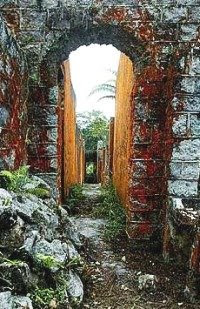
“As for Tioman bungalow, it will be refurbished as a bakery cum cafe with the al-fresco concept to attract visitors to enjoy the cool weather.”
Maznah said there would be shoplots in Bukit Fraser to place the current operators in Puncak Inn and other traders
The plan include the construction of four shoplot units, 10 units of food stalls and a unit of a multi-purpose shop.
She said there would be improvements at the tourist complex.
Maznah said historical records showed that the golf course was built on the site of a former tin mine.
She said it was tin mining that brought development to the hill
Bukit Fraser is also rich in flora and fauna; some 260 species of birds have been recorded there.
It is also the venue for international events such as a bird race held every June since 1988.
Other annual events are woodball competition in May, Rainforest Art Contest in July and a photography contest in August.
Source: Star Metro
Story and photos by Nik Naizi Husin
Friday March 14, 2008
With an allocation of RM15.15mil from the Federal Government under the Ninth Malaysia Plan, Bukit Fraser will soon have a new look with the upgrading of facilities, basic infrastructure, hotels and bungalows.
With all upgrading works expected to be completed by the end of the year, the hill resort is set to attract more locals and foreign tourists.

Central location: This colonial building, built in 1919, is home to the police station.
Pahang’s tourism agency Bukit Fraser Development Corporation chairman Datuk Maznah Mazlan said all five government-owned bungalows Chini (also known as Hollebeke bungalow), Bentong (also known as Cottage bungalow), Kuantan (also known as Cicely bungalow), Tioman bungalow and The Tavern would be refurbished.
According to Maznah, the Hollebeke (Cini) bungalow was among the earliest building established on Bukit Fraser in the 1920s.
“ It used to be the residence of the Bukit Fraser’s superintendent and later on, the official residence for the Bukit Fraser Development Corporation general manager.
“The word 'Hollebeke' is a name of an English fort during World War I.
She said the Cottage (Bentong) bungalow was the smallest bungalow on the hill.

Lovely: The post office looks simply charming, doesn’t it?
“It was formerly used as the site office of an engineer of the golf course on the highlands.
“Later on, the bungalow was used as the resthouse for the British Commisioner,” said Maznah.
Thee Cicely (Kuantan) bungalow is notable for its size.
Cicely was name of the wife of Pahang British Resident Edward John Brewster, said Maznah.
She said The Tavern, with its image of a western eatery, will remain as it is with some upgrades.
She said the restaurant’s operator would be allowed to serve western food including steak and scones to retain the “Little England” image.

Worn out: Part of what used to be a Tamil primary school.
“As for Tioman bungalow, it will be refurbished as a bakery cum cafe with the al-fresco concept to attract visitors to enjoy the cool weather.”
Maznah said there would be shoplots in Bukit Fraser to place the current operators in Puncak Inn and other traders
The plan include the construction of four shoplot units, 10 units of food stalls and a unit of a multi-purpose shop.
She said there would be improvements at the tourist complex.
Maznah said historical records showed that the golf course was built on the site of a former tin mine.
She said it was tin mining that brought development to the hill
Bukit Fraser is also rich in flora and fauna; some 260 species of birds have been recorded there.
It is also the venue for international events such as a bird race held every June since 1988.
Other annual events are woodball competition in May, Rainforest Art Contest in July and a photography contest in August.
Source: Star Metro
Saturday, January 12, 2008
New plants for New Year
New plants for New Year
By THO XIN YI
Saturday January 12, 2008
PLANTS are symbols of life and growth. For the Chinese, it is a must to have plants decorating their houses and gardens during the Chinese New Year celebration.
Some of the popular plants are, among others, bamboo shoots, lime trees, cherry blossoms and plum blossoms.
Apart from decorative purposes, each of them carries a special connotation that is usually synonymous with good health, longevity, good fortune, abundance of wealth, business growth and career successes.
Shopping for plants for next month’s Chinese New Year celebration will be more exciting and fun as there are many new choices, some quite out of the ordinary.

At the flower bazaar at the NZX Commercial Centre in Ara Damansara, lime fruit almost as big as pomelos are the big attraction among the shoppers.
“People like to buy these big lime trees as they are very special. Our lime trees are available in different styles. There are the one-tier, three-tier and also eight-tier ones,” Phoenix Ocean marketing director Eric Hong said.
Another newcomer is the dragon pussywillow that comes planted in pots, in contrast to the normal ones that come in vases without soil.
According to Hong, the Chinese love the new pussywillow as it is “alive” and will grow leaves, symbolising growth in many aspects in life.
The Bromeliad (pineapple or “ong lai” flower) in red, purple and yellow is another popular plant since it represents the arrival of fortune. “Ong lai” in Hockkien means “Fortune comes”.
“The plants here are not only suitable for decorating houses and offices; they make great gifts as well,” Hong sai

According to Hong, even non-Chinese purchase the plants because of their vibrancy and uniqueness.
Also available at the bazaar are the bamboo shoots, “change-your-luck” bamboos, bonsai, crystal soil, pussywillows, vases, plastic plants, decorative items and garden fountains.
The bamboo is very popular as a symbol of life, longevity and strength. It stays firmly rooted even in the face of fierce winds. For the Hokkiens, the bamboo plants represent their shelter from the evil demons that terrorised their ancestors during an ancient dark evil era.
The imported plants come from China and Taiwan while the homegrown ones are from Cameron Highlands.
“I will have cherry blossoms, tulips, chrysanthemums and more,” Hong said.
The bazaar, opened since Jan 1, is open from 10am till 11pm daily until the 15th day of Chinese New Year.
For more information, call 016-841 7887 (Jason) or 016-332 2322 (Melvin).
-- The Star Metro
By THO XIN YI
Saturday January 12, 2008
PLANTS are symbols of life and growth. For the Chinese, it is a must to have plants decorating their houses and gardens during the Chinese New Year celebration.
Some of the popular plants are, among others, bamboo shoots, lime trees, cherry blossoms and plum blossoms.
Apart from decorative purposes, each of them carries a special connotation that is usually synonymous with good health, longevity, good fortune, abundance of wealth, business growth and career successes.
Shopping for plants for next month’s Chinese New Year celebration will be more exciting and fun as there are many new choices, some quite out of the ordinary.

Green gifts: These bamboo shoots are among the items found at NZX Commercial Centre.
At the flower bazaar at the NZX Commercial Centre in Ara Damansara, lime fruit almost as big as pomelos are the big attraction among the shoppers.
“People like to buy these big lime trees as they are very special. Our lime trees are available in different styles. There are the one-tier, three-tier and also eight-tier ones,” Phoenix Ocean marketing director Eric Hong said.
Another newcomer is the dragon pussywillow that comes planted in pots, in contrast to the normal ones that come in vases without soil.
According to Hong, the Chinese love the new pussywillow as it is “alive” and will grow leaves, symbolising growth in many aspects in life.
The Bromeliad (pineapple or “ong lai” flower) in red, purple and yellow is another popular plant since it represents the arrival of fortune. “Ong lai” in Hockkien means “Fortune comes”.
“The plants here are not only suitable for decorating houses and offices; they make great gifts as well,” Hong sai

Unique feature: The dragon pussywillow comes planted in pots to signify growing opportunities in life.
According to Hong, even non-Chinese purchase the plants because of their vibrancy and uniqueness.
Also available at the bazaar are the bamboo shoots, “change-your-luck” bamboos, bonsai, crystal soil, pussywillows, vases, plastic plants, decorative items and garden fountains.
The bamboo is very popular as a symbol of life, longevity and strength. It stays firmly rooted even in the face of fierce winds. For the Hokkiens, the bamboo plants represent their shelter from the evil demons that terrorised their ancestors during an ancient dark evil era.
The imported plants come from China and Taiwan while the homegrown ones are from Cameron Highlands.
“I will have cherry blossoms, tulips, chrysanthemums and more,” Hong said.
The bazaar, opened since Jan 1, is open from 10am till 11pm daily until the 15th day of Chinese New Year.
For more information, call 016-841 7887 (Jason) or 016-332 2322 (Melvin).
-- The Star Metro
Thursday, January 10, 2008
Pitcher Plants Pretty as a Picture
Pretty as a picture
By Anthony Law
Thursday January 10, 2008
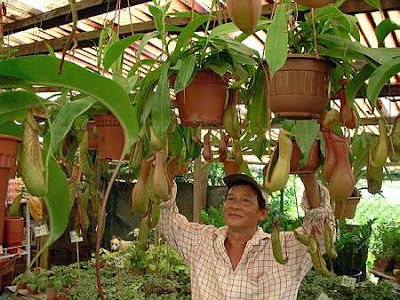
PITCHER plants or “monkey cups”, believed to bring prosperity to the owners, have been keeping Lim Ah Keat and his son busy at their nursery.
Known to thrive well in the jungles, the pitcher plants are now being nurtured via tissue culture at Kooi Lam Nursery at Bercham in Ipoh.
Ah Keat’s son Dared Lim Seck Chai, a Material Science graduate from Universiti Kebangsaan Malaysia, said he had been helping his father at the nursery with the tissue culture.
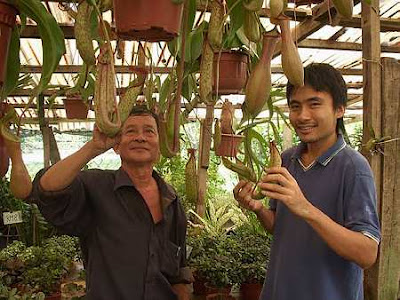
“Cultivated from the leaves of the plant, the young tissue matures into the size of an ordinary plant within two months,” said the 29-year-old Seck Chai.
Seck Chai explained that the cups of the pitcher plant attracted and trapped insects, adding that the plants fed on the trapped insects.
However, monkeys in the wild would drink water trapped in the cups, thus giving the pitcher plant the name “monkey cup”, he said, adding that its scientific name was Nepenthes.
Seck Chai said his pitcher plants could live up to 20 years and they were grown in pots at the nursery, which his father had operated for the past 30 years.

Ah Keat, 60, used to supply fruit seedlings and other plants before going into the pitcher plant business.
The nursery has over 10 different species of pitcher plants.
Some of the plants come from Cameron Highlands, the Netherlands, Belgium, Taiwan and the Philippines.
Seck Chai said the pitcher plants were popular especially during the festive season.
“Pitcher is supposed to be a favourable feng shui plant,” he said, adding that his customers would buy the plant for their homes and offices.

“Pitchers are believed to be significant as the cups hold water which means wealth or money,” Seck Chai said.
He said he was first attracted to the cups of the plants and started to grow them commercially.
The plants, which had more pitchers or cups, were considered more valuable, he said.
Ah Keat said the plants were sought after particularly during the Chinese New Year and that he expected a boom in sales.
“Pitcher plants are an endangered species but this can be prevented with the use of tissue culture,” Ah Keat said.
Direct use of fertilisers on the plant would burn the roots of the plant, he said.
“But if you are hard working, you can feed the plant by placing small insects into the cup.” -- The Star Metro
By Anthony Law
Thursday January 10, 2008

Cups of prosperity: Lim Ah Keat admiring the fruits of his labour - beautiful pitcher plants - at his nursery at Bercham, Ipoh.
PITCHER plants or “monkey cups”, believed to bring prosperity to the owners, have been keeping Lim Ah Keat and his son busy at their nursery.
Known to thrive well in the jungles, the pitcher plants are now being nurtured via tissue culture at Kooi Lam Nursery at Bercham in Ipoh.
Ah Keat’s son Dared Lim Seck Chai, a Material Science graduate from Universiti Kebangsaan Malaysia, said he had been helping his father at the nursery with the tissue culture.

Booming business: Ah Keat and Seck Chai checking the pitcher plants.
“Cultivated from the leaves of the plant, the young tissue matures into the size of an ordinary plant within two months,” said the 29-year-old Seck Chai.
Seck Chai explained that the cups of the pitcher plant attracted and trapped insects, adding that the plants fed on the trapped insects.
However, monkeys in the wild would drink water trapped in the cups, thus giving the pitcher plant the name “monkey cup”, he said, adding that its scientific name was Nepenthes.
Seck Chai said his pitcher plants could live up to 20 years and they were grown in pots at the nursery, which his father had operated for the past 30 years.

Ah Keat, 60, used to supply fruit seedlings and other plants before going into the pitcher plant business.
The nursery has over 10 different species of pitcher plants.
Some of the plants come from Cameron Highlands, the Netherlands, Belgium, Taiwan and the Philippines.
Seck Chai said the pitcher plants were popular especially during the festive season.
“Pitcher is supposed to be a favourable feng shui plant,” he said, adding that his customers would buy the plant for their homes and offices.

“Pitchers are believed to be significant as the cups hold water which means wealth or money,” Seck Chai said.
He said he was first attracted to the cups of the plants and started to grow them commercially.
The plants, which had more pitchers or cups, were considered more valuable, he said.
Ah Keat said the plants were sought after particularly during the Chinese New Year and that he expected a boom in sales.
“Pitcher plants are an endangered species but this can be prevented with the use of tissue culture,” Ah Keat said.
Direct use of fertilisers on the plant would burn the roots of the plant, he said.
“But if you are hard working, you can feed the plant by placing small insects into the cup.” -- The Star Metro
Tuesday, August 14, 2007
Rare orchid and new species may be exhibited
Rare orchid and new species may be exhibited
Tuesday August 14, 2007
By Christina Koh
TANAH RATA: A rare orchid and an Amorphophallus species unique to Cameron Highlands might soon go on display once it is proven that they are new discoveries.
Cameron Highlands district officer Datuk Mohamad Noor Abdul Rani said they were considering showcasing the plants at the Cameron Highlands Mountain Park in Parit Falls set up by Forest Research Institute of Malaysia (FRIM) and the Forestry Department.
The park, expected to open this year, will feature mountain flowers, orchids and other plant species, especially those endemic to Cameron Highlands.
“The two plants would be a testament to the region’s rich biodiversity and a valuable attraction for eco-tourists,” Mohamad Noor said.
One of the plants is an Amorphophallus plant recently discovered by a group of scientists led by Datuk Seri Lim Chong Keat during a FRIM botanical expedition.
Mohamad Noor said the plants, which came in two variants of purple or white flowers, had been surprisingly found growing near the side of the road at the foot of Gunung Jasar.
“A team from Universiti Malaysia Sarawak is now studying the Amorphophallus plant to determine if it is a new species, and if it could be safely moved to a new habitat,” he said.
He added that the plant could be unique to the highlands, since other Malaysian Amorphophallus species were all usually found in the warmer lowlands.
“In Indonesia, the Amorphophallus plant is called bunga bangkai because of its corpse-like stench. However, the ones in Cameron Highlands are much taller,” he said.
The other new discovery Mohamad Noor was hoping to display is the rare Monomeria orchid, a genus of orchid previously not found anywhere else in Malaysia.
Environmentalists Embi Abdullah, 59, and N. Madi, 52, first came across the orchid last year while trekking in the jungles of the Ruil mountains. -- The Star.
Tuesday August 14, 2007
By Christina Koh
TANAH RATA: A rare orchid and an Amorphophallus species unique to Cameron Highlands might soon go on display once it is proven that they are new discoveries.
Cameron Highlands district officer Datuk Mohamad Noor Abdul Rani said they were considering showcasing the plants at the Cameron Highlands Mountain Park in Parit Falls set up by Forest Research Institute of Malaysia (FRIM) and the Forestry Department.
The park, expected to open this year, will feature mountain flowers, orchids and other plant species, especially those endemic to Cameron Highlands.
“The two plants would be a testament to the region’s rich biodiversity and a valuable attraction for eco-tourists,” Mohamad Noor said.
One of the plants is an Amorphophallus plant recently discovered by a group of scientists led by Datuk Seri Lim Chong Keat during a FRIM botanical expedition.
Mohamad Noor said the plants, which came in two variants of purple or white flowers, had been surprisingly found growing near the side of the road at the foot of Gunung Jasar.
“A team from Universiti Malaysia Sarawak is now studying the Amorphophallus plant to determine if it is a new species, and if it could be safely moved to a new habitat,” he said.
He added that the plant could be unique to the highlands, since other Malaysian Amorphophallus species were all usually found in the warmer lowlands.
“In Indonesia, the Amorphophallus plant is called bunga bangkai because of its corpse-like stench. However, the ones in Cameron Highlands are much taller,” he said.
The other new discovery Mohamad Noor was hoping to display is the rare Monomeria orchid, a genus of orchid previously not found anywhere else in Malaysia.
Environmentalists Embi Abdullah, 59, and N. Madi, 52, first came across the orchid last year while trekking in the jungles of the Ruil mountains. -- The Star.
Monday, July 23, 2007
Importance of moss
Expert: Moss plays important role in flood prevention
By ROYCE CHEAH
Monday July 23, 2007
PETALING JAYA: You may not pay much attention to it at all, but the diminutive moss plays an important role in retaining water in catchment areas.
This comes as a significant discovery to researchers in the field of bryology (the study of bryophytes - commonly known as mosses) especially since it has always been assumed that trees were more important in slowing water from running off when it rains, which in turn helps to prevent floods.
According to research carried out in Genting Highlands, just one square metre (2-3cm thick) of a particular moss found there can store one metric tonne of water for a week.
Prof Mohamed Abdul Majid from the Universiti Malaya Biological Science Institute said the destruction of forests also meant that the moss growing on branches would be destroyed.
Speaking to reporters after the launch of the five-day World Conference of Bryology here, Prof Mohamed said there were numerous other uses for mosses that were only now being explored.
"The ability to easily manipulate the genes of a moss to 'tell it what to do' has yielded many promising results," he said.
He added that Mount Kinabalu, in Sabah, probably contained the most diverse number of mosses in the world with more than 1,000 species present.
International Association of Bryologists president Prof Janice M. Glime said mosses have been found to contain anti-cancer and anti-bacterial properties.
Prof Mohamed added that one of the mosses which had anti-cancer properties was found in Cameron Highlands by world-renowned researcher Y. Asakawa from the Tokushima Bunri University in Japan.
"This is why it is important to research it. It is a largely untapped field and we still don't know enough about mosses and its potential in medicine," Prof Janice said.
She added that some countries have used mosses for insulation, air-conditioning or purely aesthetic purposes.
Prof Janice noted that in Australia and parts of America, the use of mosses in horticulture or to provide fuel has depleted the amount present in forests prompting the need for harvesting guidelines. -- The Star.
By ROYCE CHEAH
Monday July 23, 2007
PETALING JAYA: You may not pay much attention to it at all, but the diminutive moss plays an important role in retaining water in catchment areas.
This comes as a significant discovery to researchers in the field of bryology (the study of bryophytes - commonly known as mosses) especially since it has always been assumed that trees were more important in slowing water from running off when it rains, which in turn helps to prevent floods.
According to research carried out in Genting Highlands, just one square metre (2-3cm thick) of a particular moss found there can store one metric tonne of water for a week.
Prof Mohamed Abdul Majid from the Universiti Malaya Biological Science Institute said the destruction of forests also meant that the moss growing on branches would be destroyed.
Speaking to reporters after the launch of the five-day World Conference of Bryology here, Prof Mohamed said there were numerous other uses for mosses that were only now being explored.
"The ability to easily manipulate the genes of a moss to 'tell it what to do' has yielded many promising results," he said.
He added that Mount Kinabalu, in Sabah, probably contained the most diverse number of mosses in the world with more than 1,000 species present.
International Association of Bryologists president Prof Janice M. Glime said mosses have been found to contain anti-cancer and anti-bacterial properties.
Prof Mohamed added that one of the mosses which had anti-cancer properties was found in Cameron Highlands by world-renowned researcher Y. Asakawa from the Tokushima Bunri University in Japan.
"This is why it is important to research it. It is a largely untapped field and we still don't know enough about mosses and its potential in medicine," Prof Janice said.
She added that some countries have used mosses for insulation, air-conditioning or purely aesthetic purposes.
Prof Janice noted that in Australia and parts of America, the use of mosses in horticulture or to provide fuel has depleted the amount present in forests prompting the need for harvesting guidelines. -- The Star.
Tuesday, July 17, 2007
Captivated by Orchids
Captivated by orchids
By Clara Chooi
Tuesday July 17, 2007
Orchids have always fascinated Sin Chan Wah, a farmer in Cameron Highlands.
The 50-year-old farmer from the town of Ringlet was seen fawning over his precious blooms during Clearwater Flora Fest 2007 at the golf resort in Batu Gajah recently.
In fact, Sin’s orchids practically stole the entire show.
Of the 400 entries sent in from across the country for the com- petitive event, Sin’s most treasured orchids clinched both grand titles: Best Plant and Best Species.
Sin’s Paphiopedilum barbatum, better known as the Lady’s Slipper because of its shape, won the show’s Best Plant category, while his pre-cious Stanhopea Jenishiana, a South American breed, won the Best Spe-cies category.
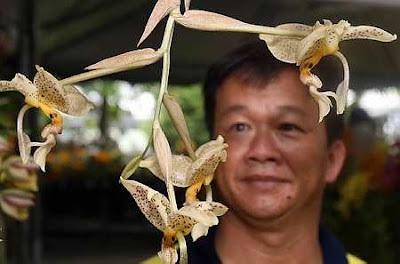
South American breed:Sin admiring his Stanhopea Jenishiana blooms.
Sin said that he purchased the latter at RM80 from a local dealer 18 months ago.
“In fact, it only began flowering not long before the show,” he said.
Sin also won first prize in the Show Plant category for one of his orchids in the Onicidium group.
“I always admired orchids be-cause they are special looking plants. In fact, that was why I got into the orchid business in the first place,” he said.
He added that he first started out in the farming business by growing mushrooms in 1985.
“After a while, I realised the business was not very appropriate for me at the time so I began plant- ing strawberries,” said the father of two.
About three years ago, Sin disco-vered a new passion in orchids and decided to venture into it.
He is currently an orchid hybr-dizer and has his own nursery at Bertam Valley, Ringlet.
“My wife is very much in love with the flowers too. In fact, she devotes much time tending to them,” said Sin.
The flora fest, organised by the golf club in collaboration with the Perak Orchid Society, was held from July 13 to July 15 in conjunction with Visit Malaysia 2007.
The event saw the participation of 14 orchid vendors across the country as well as the Orchid Society of South East Asia from Singapore and the Taiwan Orchids Grower Association. -- The Star
By Clara Chooi
Tuesday July 17, 2007
Orchids have always fascinated Sin Chan Wah, a farmer in Cameron Highlands.
The 50-year-old farmer from the town of Ringlet was seen fawning over his precious blooms during Clearwater Flora Fest 2007 at the golf resort in Batu Gajah recently.
In fact, Sin’s orchids practically stole the entire show.
Of the 400 entries sent in from across the country for the com- petitive event, Sin’s most treasured orchids clinched both grand titles: Best Plant and Best Species.
Sin’s Paphiopedilum barbatum, better known as the Lady’s Slipper because of its shape, won the show’s Best Plant category, while his pre-cious Stanhopea Jenishiana, a South American breed, won the Best Spe-cies category.

Sin said that he purchased the latter at RM80 from a local dealer 18 months ago.
“In fact, it only began flowering not long before the show,” he said.
Sin also won first prize in the Show Plant category for one of his orchids in the Onicidium group.
“I always admired orchids be-cause they are special looking plants. In fact, that was why I got into the orchid business in the first place,” he said.
He added that he first started out in the farming business by growing mushrooms in 1985.
“After a while, I realised the business was not very appropriate for me at the time so I began plant- ing strawberries,” said the father of two.
About three years ago, Sin disco-vered a new passion in orchids and decided to venture into it.
He is currently an orchid hybr-dizer and has his own nursery at Bertam Valley, Ringlet.
“My wife is very much in love with the flowers too. In fact, she devotes much time tending to them,” said Sin.
The flora fest, organised by the golf club in collaboration with the Perak Orchid Society, was held from July 13 to July 15 in conjunction with Visit Malaysia 2007.
The event saw the participation of 14 orchid vendors across the country as well as the Orchid Society of South East Asia from Singapore and the Taiwan Orchids Grower Association. -- The Star
Tuesday, March 27, 2007
Trekkers damaging floral species on Gunung Brinchang
Trekkers damaging floral species on Gunung Brinchang
Tuesday March 27, 2007
By Nik Naizi Husin
CAMERON HIGHLANDS: Located in one of the 17 forest reserve areas in Cameron Highlands, the mossy forest in Batu Gangan on Gunung Brinchang needs to be preserved.
The forest, which is about 1,500m above sea level on the mountain, has been the water catchment area for Cameron Highlands and it lies along the boundary of Pahang-Perak.
As it is the only route for trekkers to Gunung Irau, the forest has been disturbed, causing the demise of some of the floral species in the area including forest orchid, moss, duit-duit, paku pakis, bamboos and paku gajah.

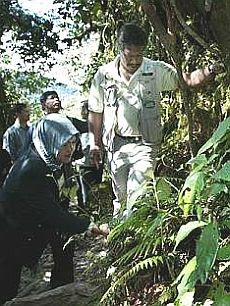
State Arts, Culture, Tourism, Heritage, Women and Family Development Committee chairman Datuk Maznah Mazlan said the state government would provide a 200m long board walk as the platform for trekkers and other visitors to walk over the mossy area.
She it was to reduce the disturbances in the area as some parts were badly affected because of trekking activities.
She said the state Forestry Department had been assigned to design the project, so that the mossy areas of the forest and its surroundings of flora would be intact at all times.
“The mossy area is important to preserve the micro climate and as a water catchment area.
“It is also the place for wildlife and there is also a telecommunications satellite station there,” Maznah said.
She said the area was suitable for bird watching activities.
“With all these activities, the mossy forest will be damaged if no efforts were taken to conserve it.
“Packages of tourists visiting here have to be controlled so that the place will not be over-populated in terms of visitors,” she said during her visit here recently.
Other basic amenities needed in the areas were waste bins, parking lots and a guard house for caretakers to control the number of vehicles entering the area and to check on any illegal activities such as the removal of species of flora from the area.
Maznah said some of the popular species in the forest included the periuk kera (pitcher plants) and orchids. -- The Star.
Tuesday March 27, 2007
By Nik Naizi Husin
CAMERON HIGHLANDS: Located in one of the 17 forest reserve areas in Cameron Highlands, the mossy forest in Batu Gangan on Gunung Brinchang needs to be preserved.
The forest, which is about 1,500m above sea level on the mountain, has been the water catchment area for Cameron Highlands and it lies along the boundary of Pahang-Perak.
As it is the only route for trekkers to Gunung Irau, the forest has been disturbed, causing the demise of some of the floral species in the area including forest orchid, moss, duit-duit, paku pakis, bamboos and paku gajah.

Sheen of moss: Trees covered by moss in the forest of Gunong Brinchang at Cameron Highlands.
State Arts, Culture, Tourism, Heritage, Women and Family Development Committee chairman Datuk Maznah Mazlan said the state government would provide a 200m long board walk as the platform for trekkers and other visitors to walk over the mossy area.
She it was to reduce the disturbances in the area as some parts were badly affected because of trekking activities.
She said the state Forestry Department had been assigned to design the project, so that the mossy areas of the forest and its surroundings of flora would be intact at all times.
“The mossy area is important to preserve the micro climate and as a water catchment area.
“It is also the place for wildlife and there is also a telecommunications satellite station there,” Maznah said.
She said the area was suitable for bird watching activities.

Treasure trove: Maznah examining one of the plant species in the forest.
“With all these activities, the mossy forest will be damaged if no efforts were taken to conserve it.
“Packages of tourists visiting here have to be controlled so that the place will not be over-populated in terms of visitors,” she said during her visit here recently.
Other basic amenities needed in the areas were waste bins, parking lots and a guard house for caretakers to control the number of vehicles entering the area and to check on any illegal activities such as the removal of species of flora from the area.
Maznah said some of the popular species in the forest included the periuk kera (pitcher plants) and orchids. -- The Star.
Tuesday, February 20, 2007
Treasure trove of rare species
Treasure Trove of Rare Species
Tuesday February 20, 2007

Serious business: Dr Saw Leng Guan (right), head of the Flora of Peninsular Malaysia project, scrutinising the wild pitcher plants collected by nursery operator Tai Teck Boon.
WHEN Tai Teck Boon was a young boy growing up in Cameron Highlands, he witnessed constant deforestation for vegetable farms and other development projects. He saw huge ancient trees brought down together with many wild, epiphytic plants such as orchids.
 Valuable specimen: This flowering rhododendron is collected to enrich the Kepong Herbarium.
“It was such a pity to let the orchids die just like that. So, I took them back and grew them,” recalls the 60-year-old from Brinchang. His hobby later turned into a business and he has been running a nursery for 40 years selling mainly montane plants.
Unwittingly, Tai has rescued many plants from possible extinction, such as the one that Dutch orchidologist Dr Jaap Vermeulen described as Bulbophyllum ochthodes.
Over the years, Tai’s wild collections have grown into a treasure trove of rare and endangered species that attract researchers and enthusiasts, locals as well as foreign. He readily allows scientists like those working on the Flora of Peninsular Malaysia project access to his collections.
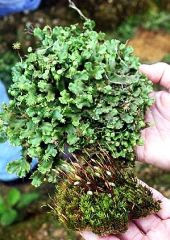 Little green wonder: Mosses found in a ditch next to a vegetable plot in Cameron Highlands.
Project director Dr Saw Leng Guan admits that collaborating with nursery operators can be a “tricky” undertaking as a bona fide scientist would not want to be seen as endorsing such commercial activity. However, given the difficulties in obtaining certain rare plants, he says researchers have to work with private collectors.
Tai insists that he is not breaking any laws because he merely picked up ”discards”. His nursery was previously raided by Department of Forestry staff when word about his huge collection of wild plants got around but the enforcers did not find any incriminating evidence.
Saw says enforcement is hampered by the absence of laws. “Unlike the Protection of Wildlife Act that protects fauna species, our flora species are largely unprotected. Until we get our act together, the loophole will be exploited.”
 Forest beauty: A herbaceous plant that thrives in the understorey of tropical forests and on slopes in the montane jungle of our highlands.
Clearing of forests requires a licence from state forestry departments but it is silent on non-timber products extracted from the concession. There is indication that illegal collections do occur in Cameron Highlands for high value species such as orchids, either for personal collections or nurseries that cater to overseas collectors.
Tai, however, might be a different sort of collector – he does not to hide his collection and is willing to share them. Given his vast experience in dealing with plants, he is assisting in the setting up of the Montane Flora Conservatory under the Cameron Highlands Montane Park project – a collaboration between Forest Research Institute of Malaysia and Pahang Forestry Department.
The conservatory at Brinchang aims to be the central depository for montane species in an effort to preserve them for conservation, research and education. It houses collections from Frasers Hill, Gunung Jerai and Cameron Highlands and will soon be opened to the public.
- The Star.
Tuesday February 20, 2007

Serious business: Dr Saw Leng Guan (right), head of the Flora of Peninsular Malaysia project, scrutinising the wild pitcher plants collected by nursery operator Tai Teck Boon.
WHEN Tai Teck Boon was a young boy growing up in Cameron Highlands, he witnessed constant deforestation for vegetable farms and other development projects. He saw huge ancient trees brought down together with many wild, epiphytic plants such as orchids.
 Valuable specimen: This flowering rhododendron is collected to enrich the Kepong Herbarium.
“It was such a pity to let the orchids die just like that. So, I took them back and grew them,” recalls the 60-year-old from Brinchang. His hobby later turned into a business and he has been running a nursery for 40 years selling mainly montane plants.
Unwittingly, Tai has rescued many plants from possible extinction, such as the one that Dutch orchidologist Dr Jaap Vermeulen described as Bulbophyllum ochthodes.
Over the years, Tai’s wild collections have grown into a treasure trove of rare and endangered species that attract researchers and enthusiasts, locals as well as foreign. He readily allows scientists like those working on the Flora of Peninsular Malaysia project access to his collections.
 Little green wonder: Mosses found in a ditch next to a vegetable plot in Cameron Highlands.
Project director Dr Saw Leng Guan admits that collaborating with nursery operators can be a “tricky” undertaking as a bona fide scientist would not want to be seen as endorsing such commercial activity. However, given the difficulties in obtaining certain rare plants, he says researchers have to work with private collectors.
Tai insists that he is not breaking any laws because he merely picked up ”discards”. His nursery was previously raided by Department of Forestry staff when word about his huge collection of wild plants got around but the enforcers did not find any incriminating evidence.
Saw says enforcement is hampered by the absence of laws. “Unlike the Protection of Wildlife Act that protects fauna species, our flora species are largely unprotected. Until we get our act together, the loophole will be exploited.”
 Forest beauty: A herbaceous plant that thrives in the understorey of tropical forests and on slopes in the montane jungle of our highlands.
Clearing of forests requires a licence from state forestry departments but it is silent on non-timber products extracted from the concession. There is indication that illegal collections do occur in Cameron Highlands for high value species such as orchids, either for personal collections or nurseries that cater to overseas collectors.
Tai, however, might be a different sort of collector – he does not to hide his collection and is willing to share them. Given his vast experience in dealing with plants, he is assisting in the setting up of the Montane Flora Conservatory under the Cameron Highlands Montane Park project – a collaboration between Forest Research Institute of Malaysia and Pahang Forestry Department.
The conservatory at Brinchang aims to be the central depository for montane species in an effort to preserve them for conservation, research and education. It houses collections from Frasers Hill, Gunung Jerai and Cameron Highlands and will soon be opened to the public.
- The Star.
Subscribe to:
Posts (Atom)
